Weaving the Land
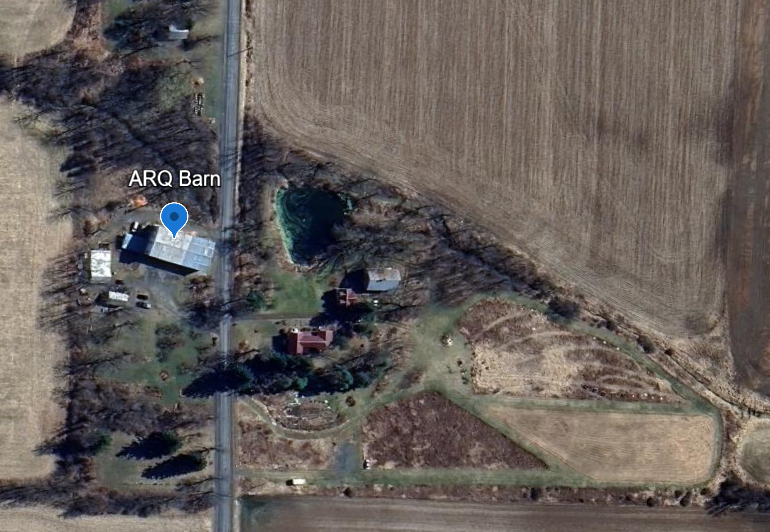
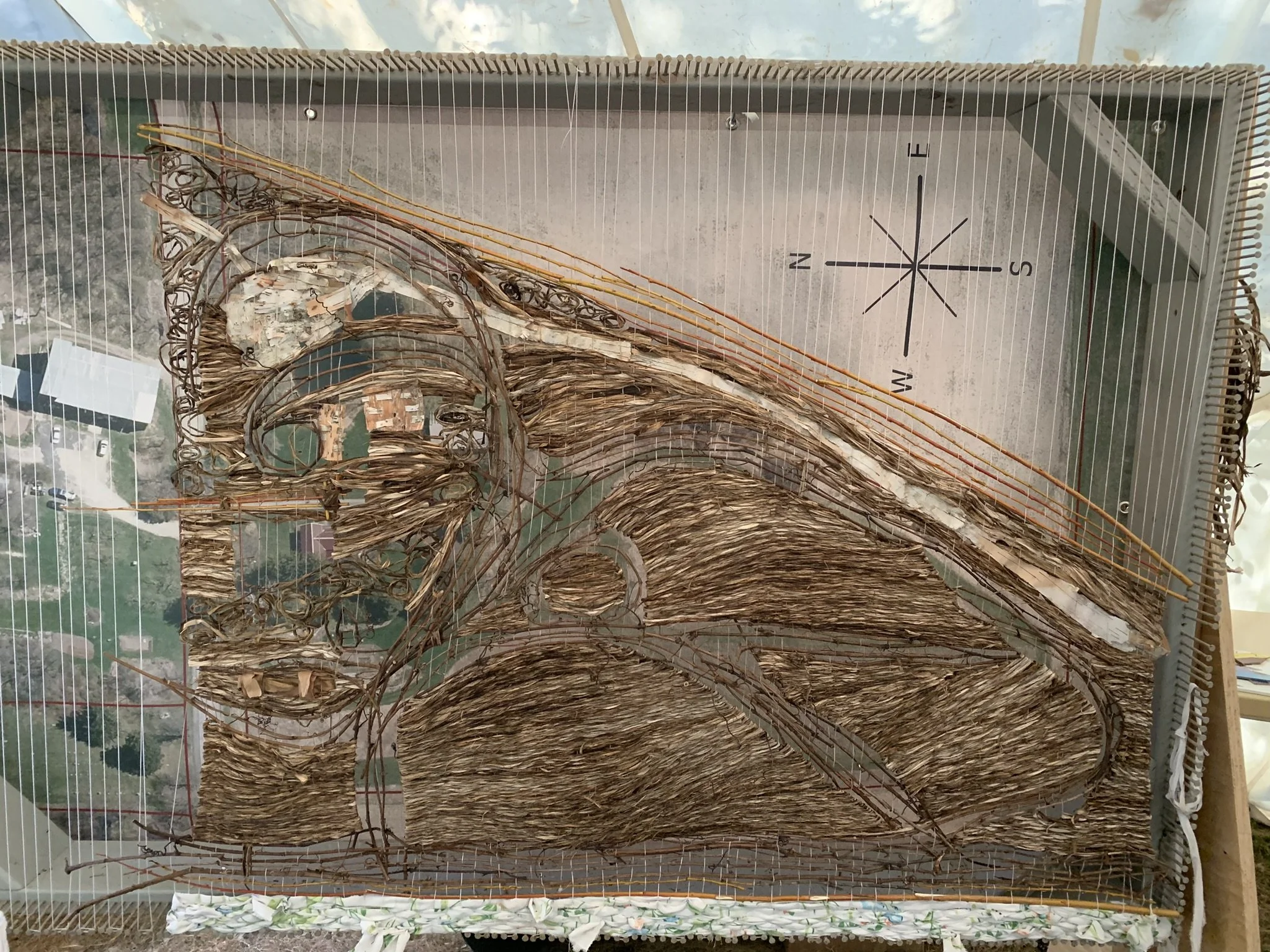
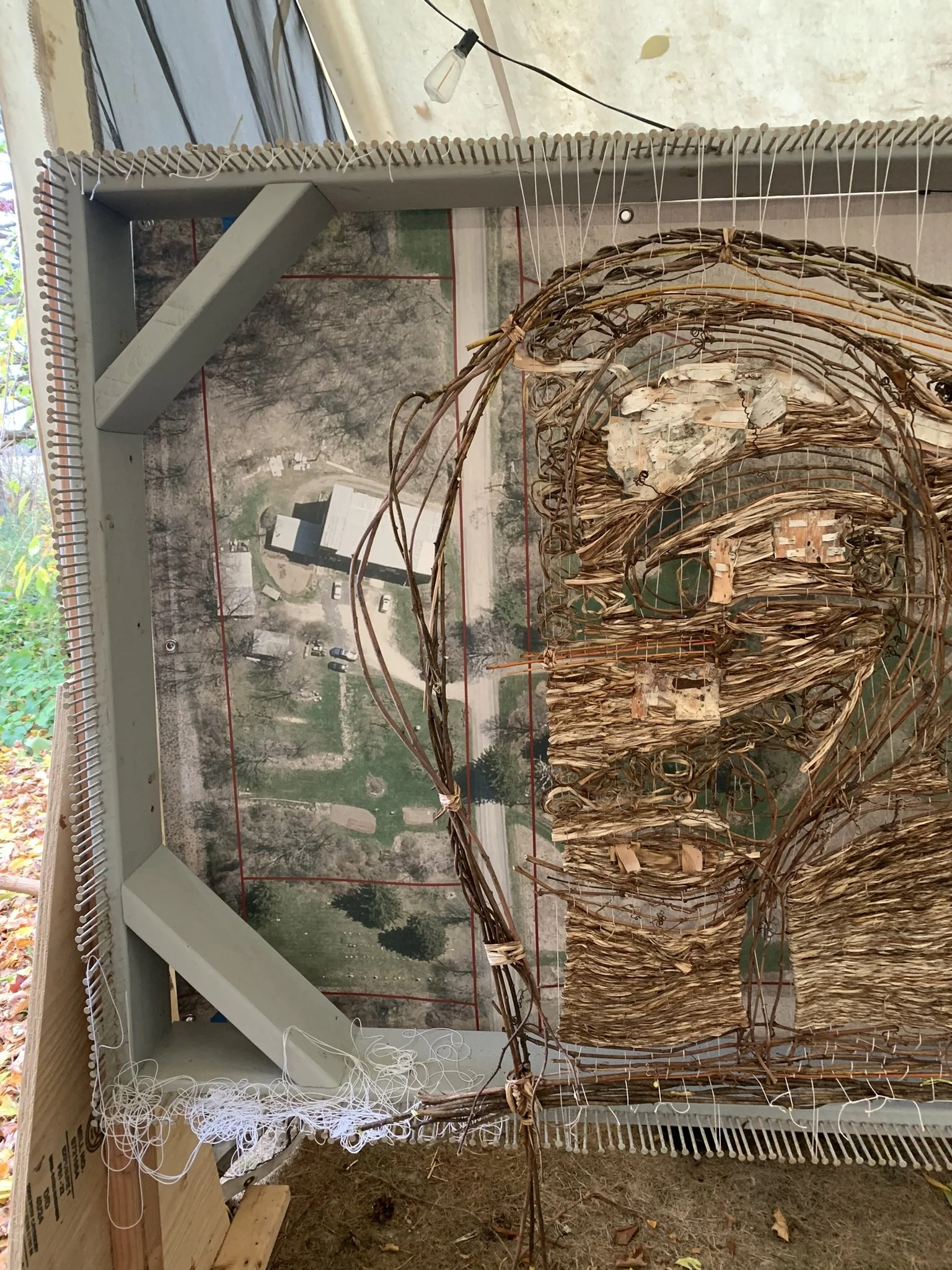
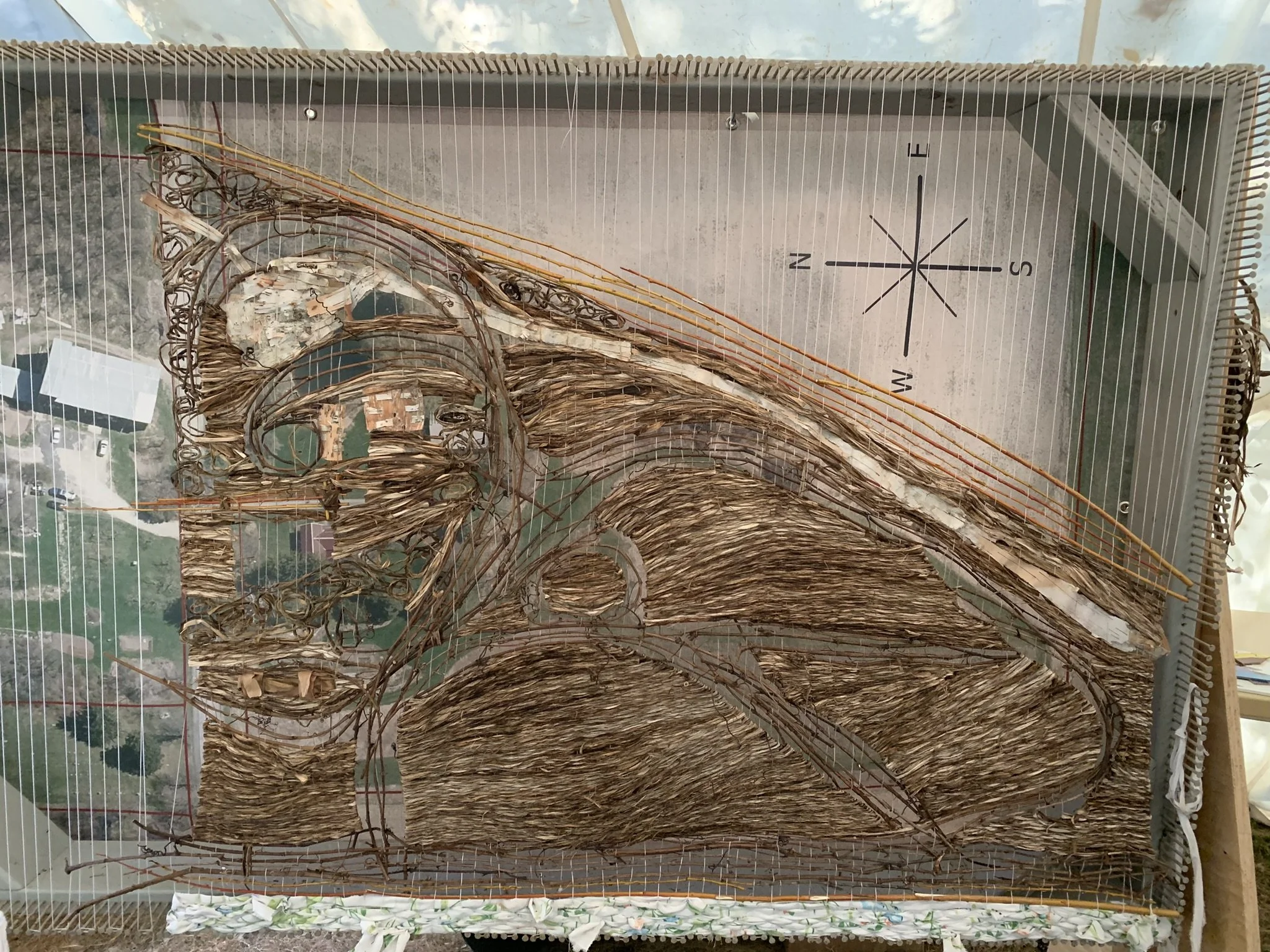
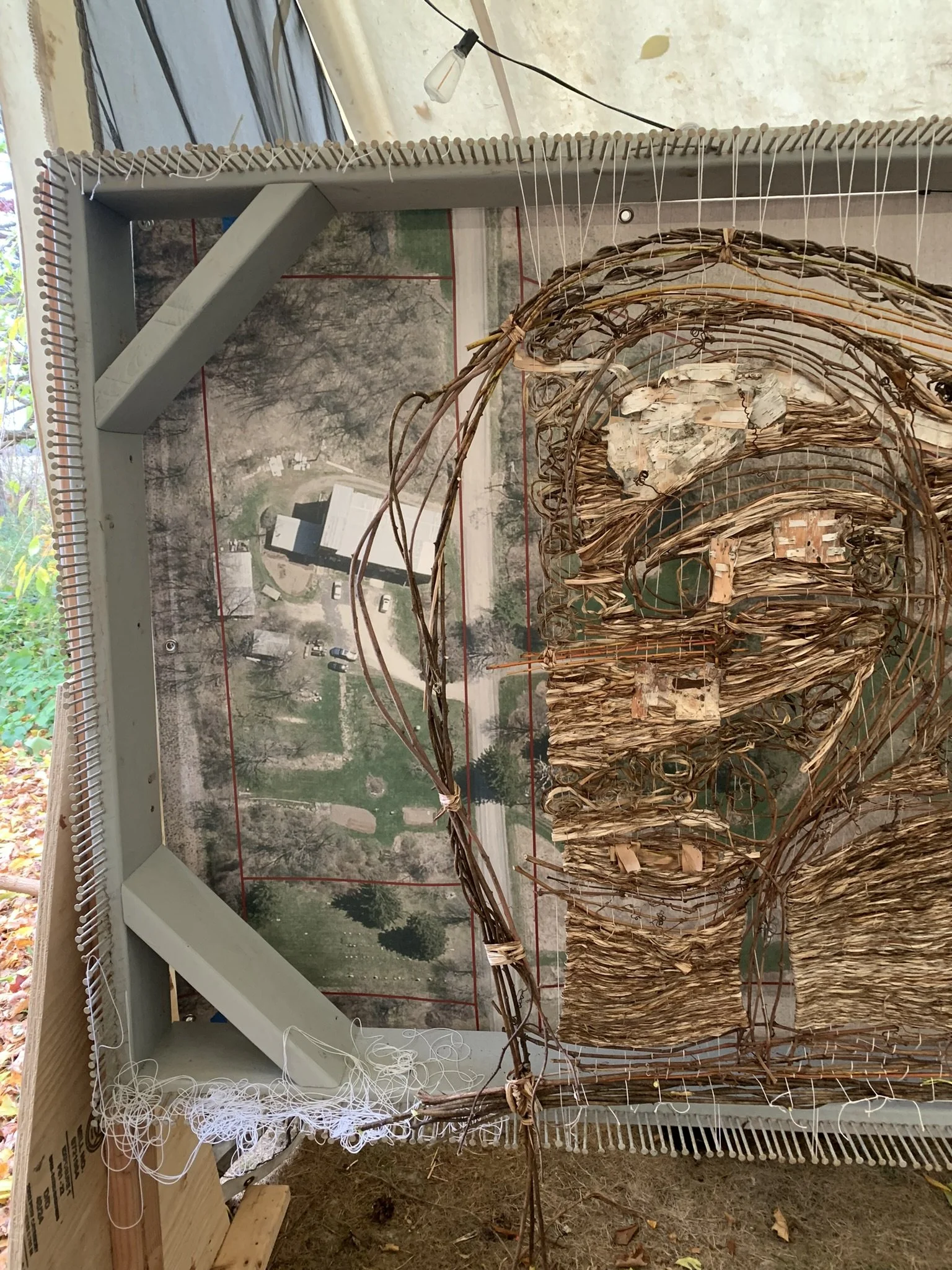
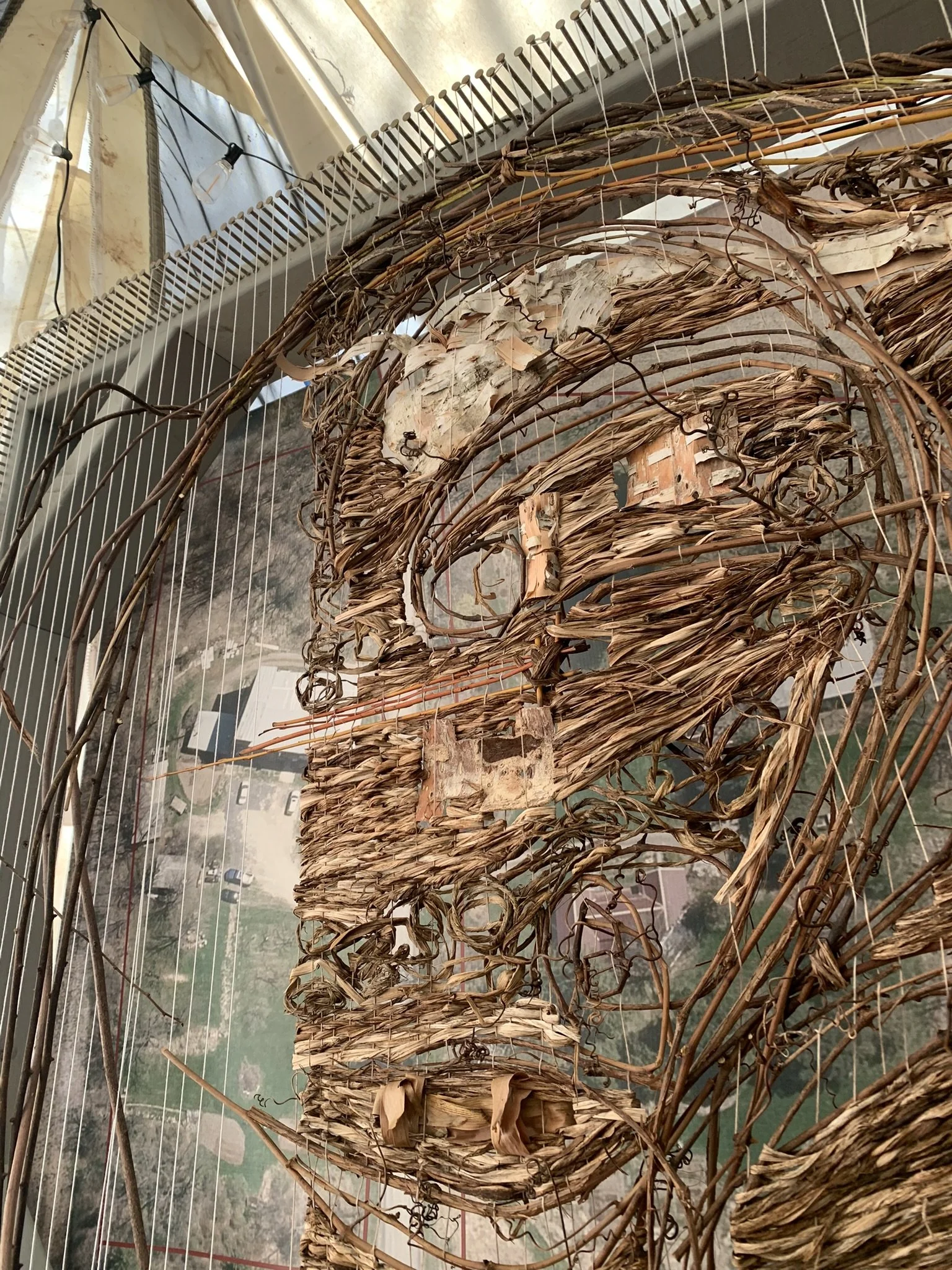
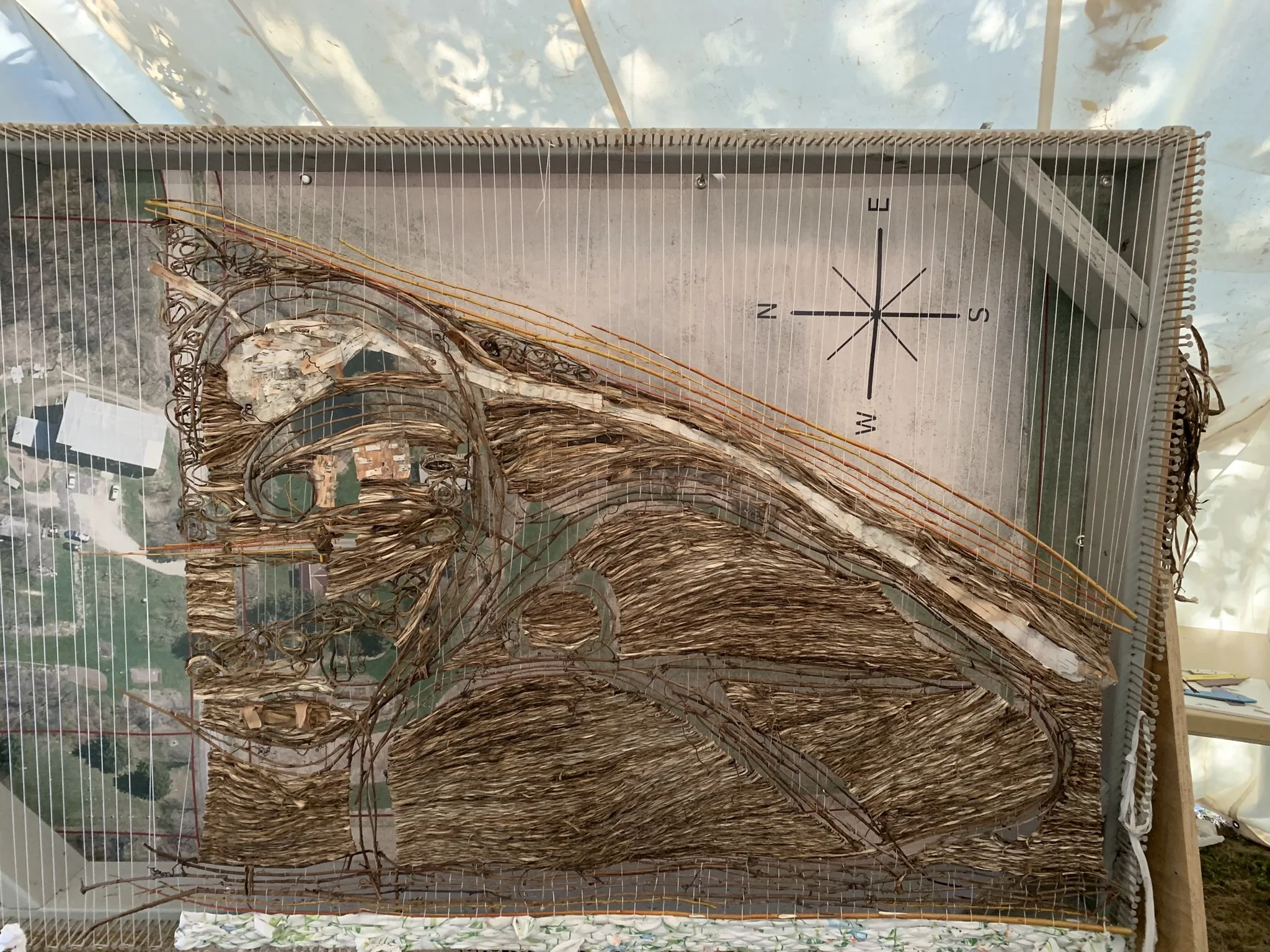
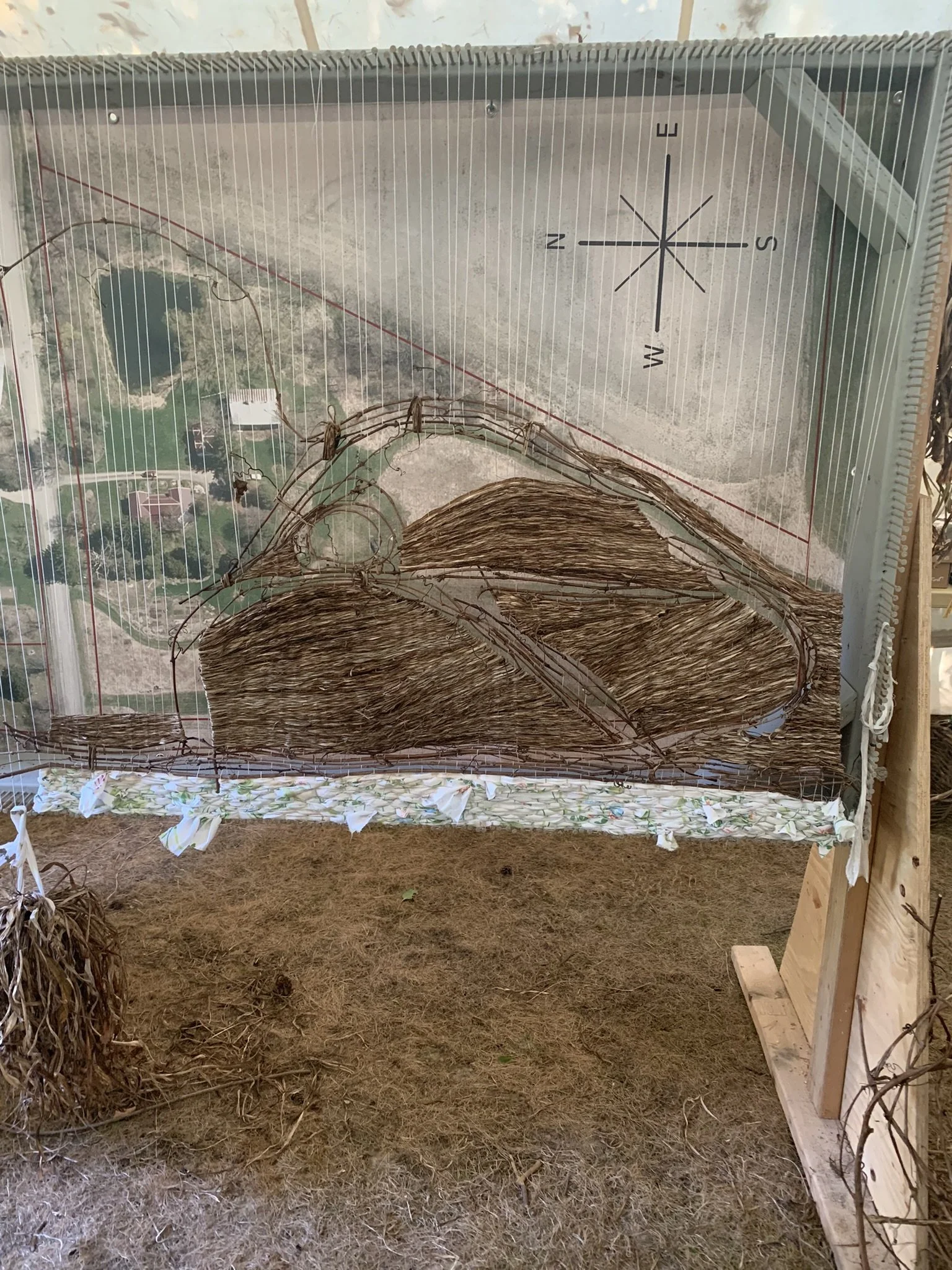
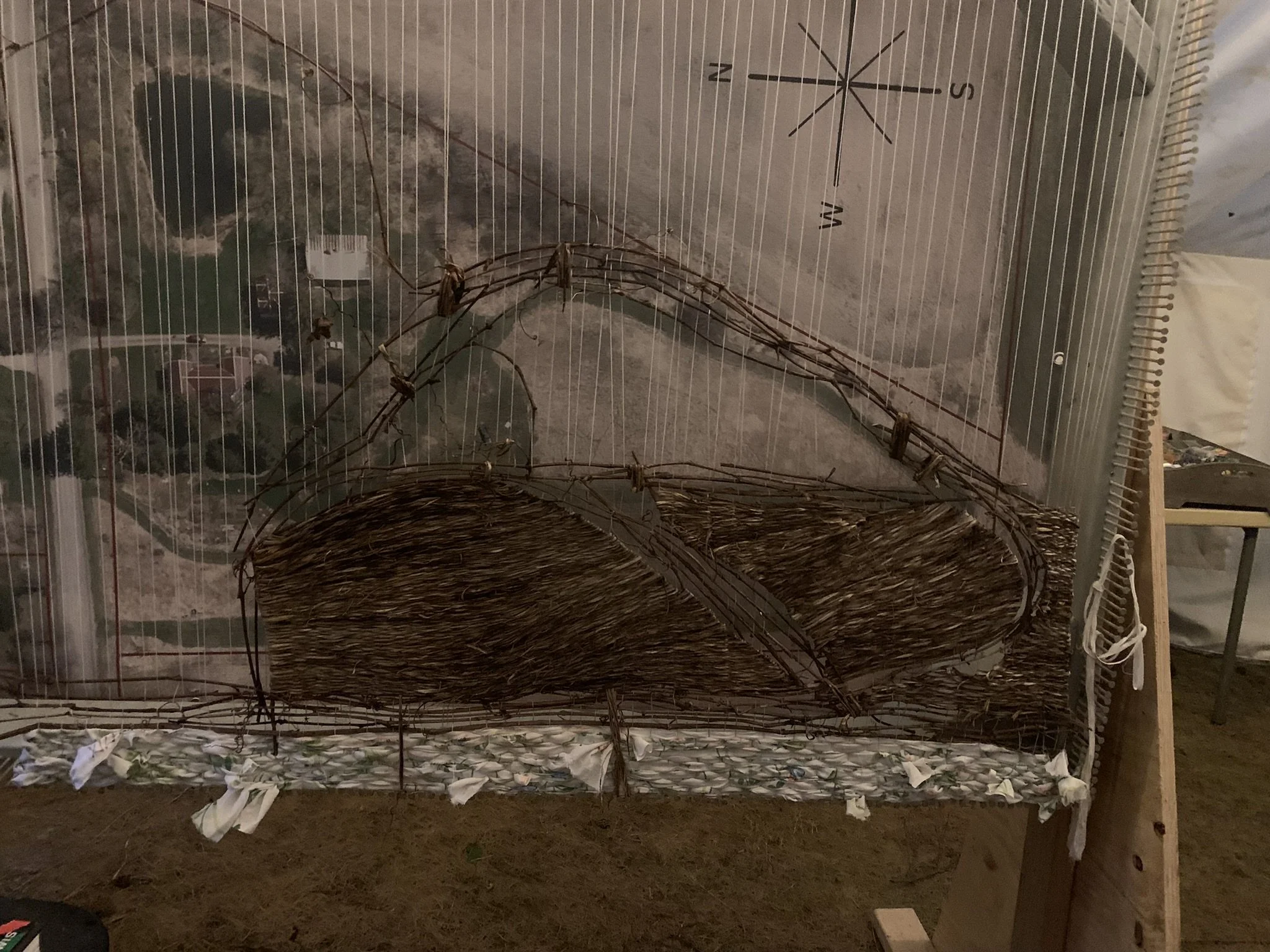
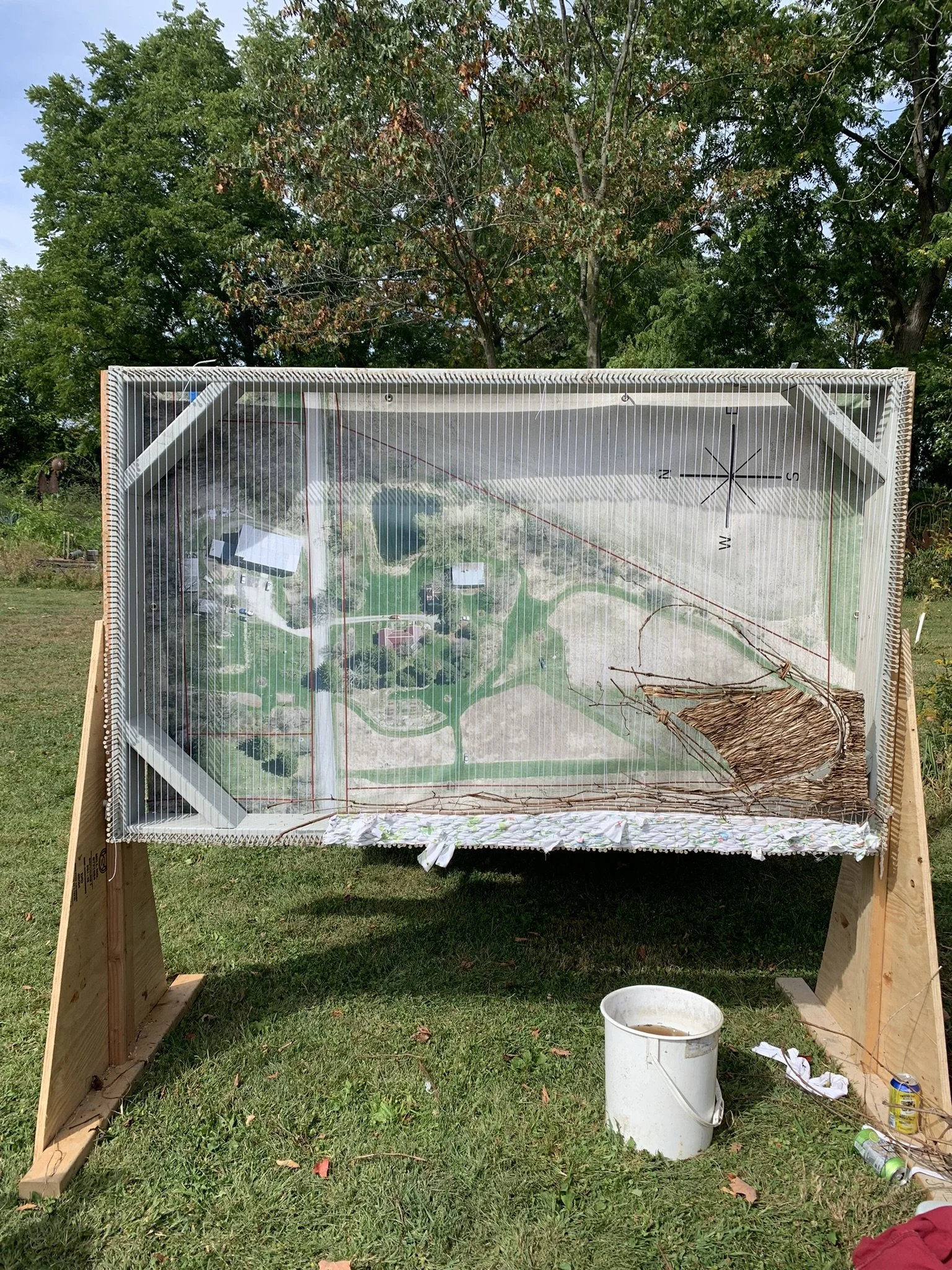
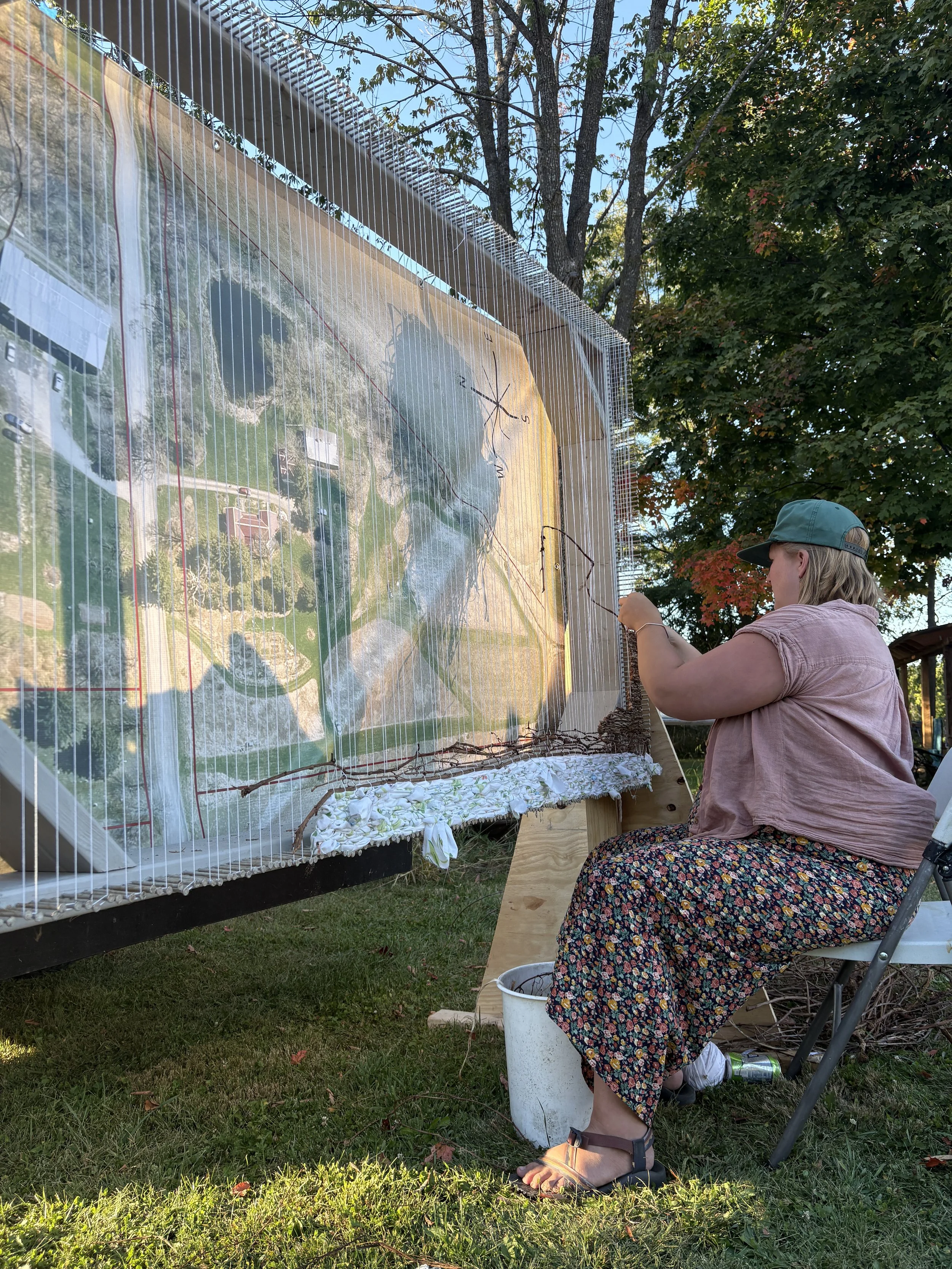
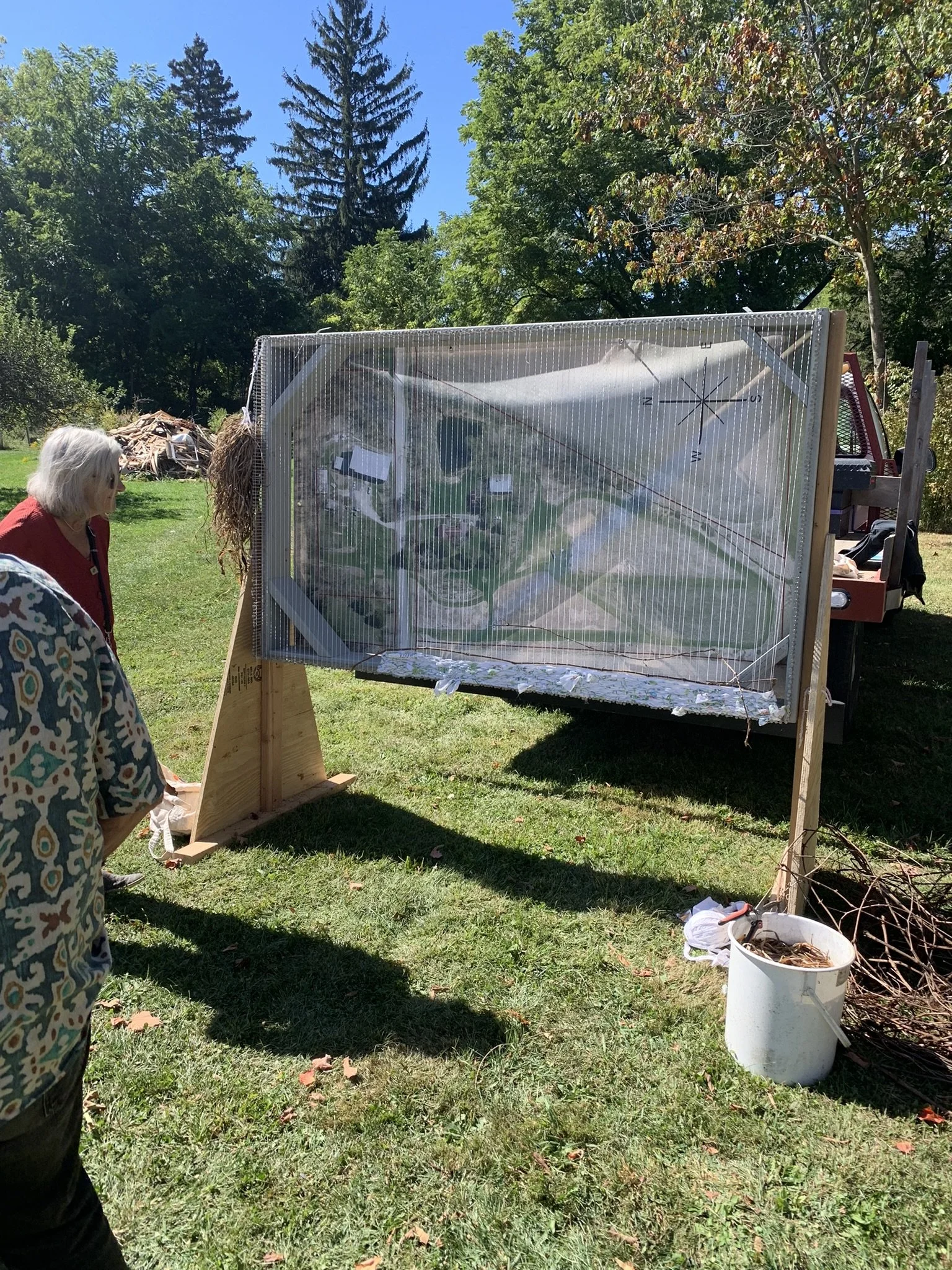
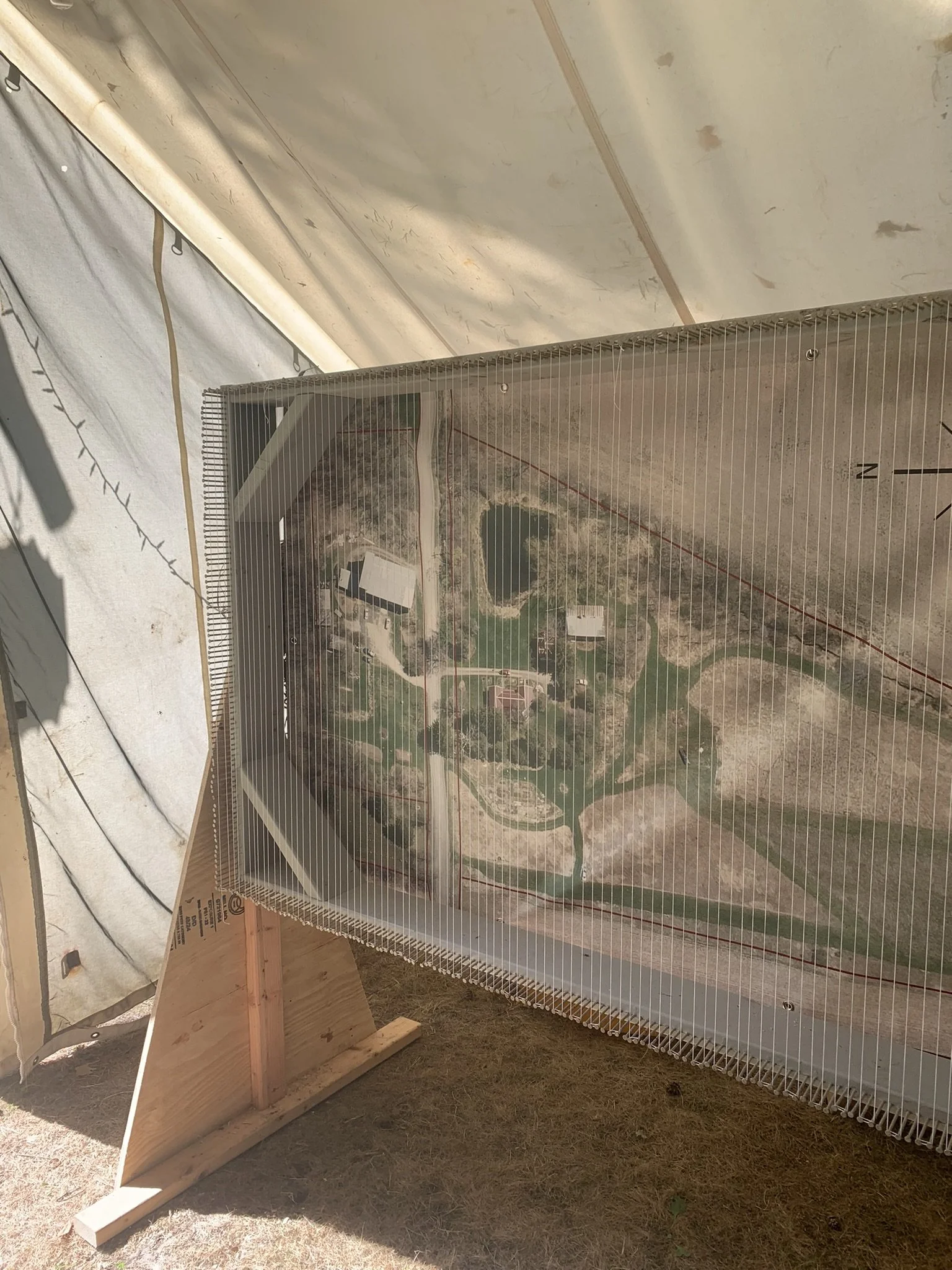
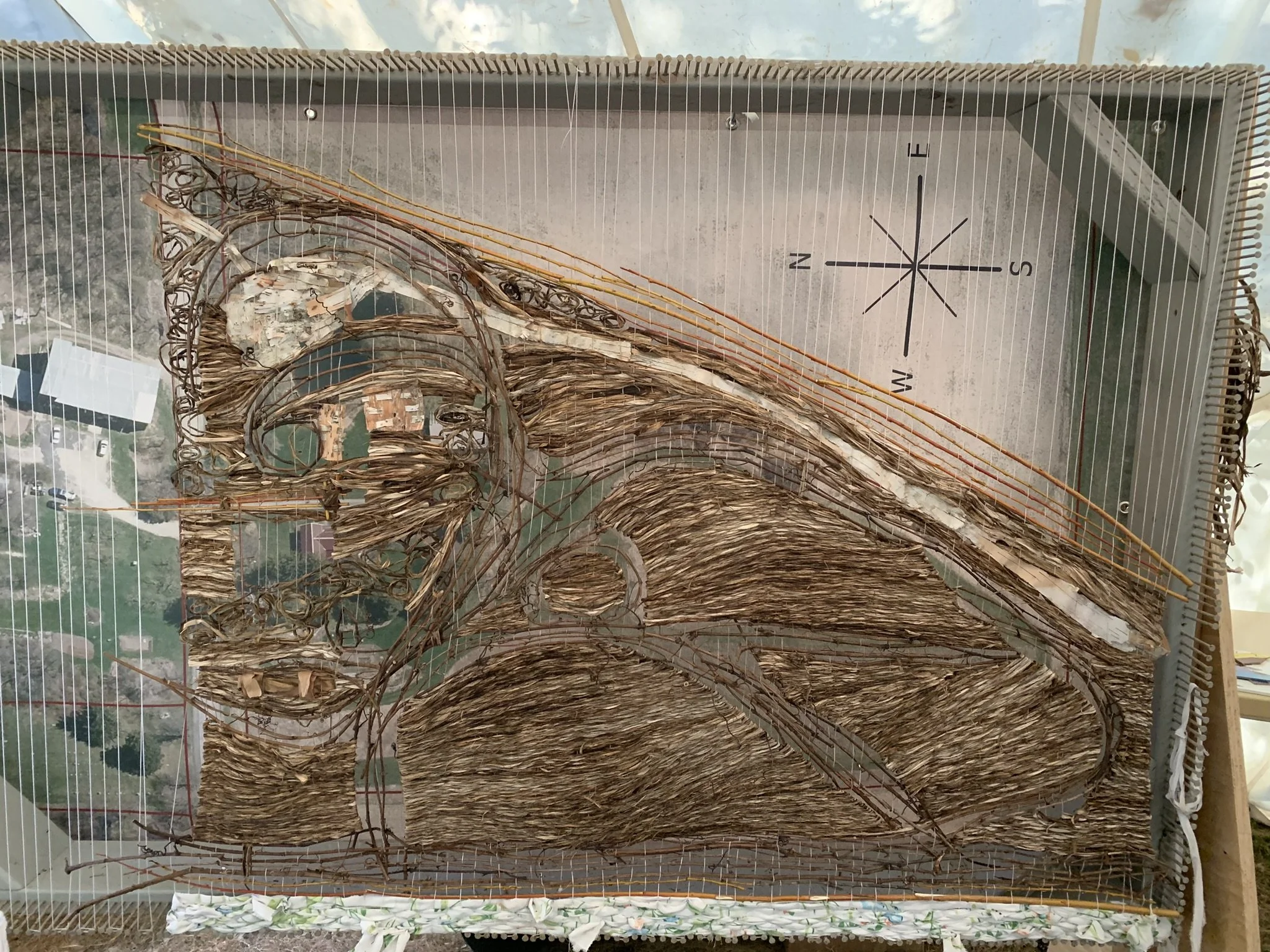
Individual Artist grant awarded to support 9-month project weaving a land map of Artist Resource Quarters in Mecklenburg NY (my inherited home) using only wild fibers found on the land.
Year Awarded
2025
WEAVING THE LAND
PROJECT & EXHIBITS TIMELINEY
UPCOMING
November 2026-January 2027 - Community Group Show, Ulysses Philomathic Library, Trumansburg NY
PAST
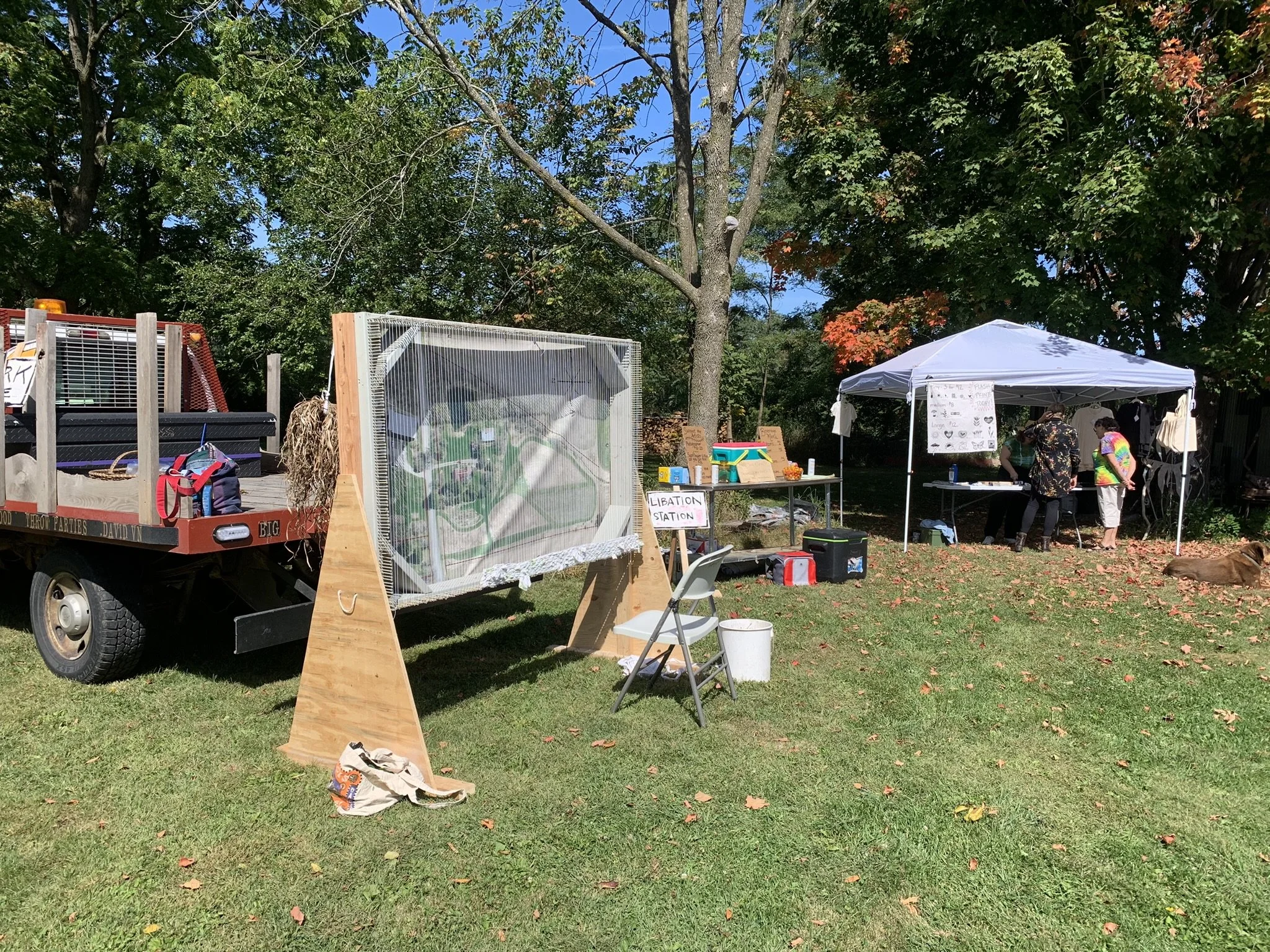
July 16-20th 2026 - On display at the Finger Lakes Grassroots Festival of Music and Dance in the Art Barn, Trumansburg NY
May 2nd 2026 - Selected for the Food Forest Art Show at Birding Man, Ramble On Farms, Trumansburg NY
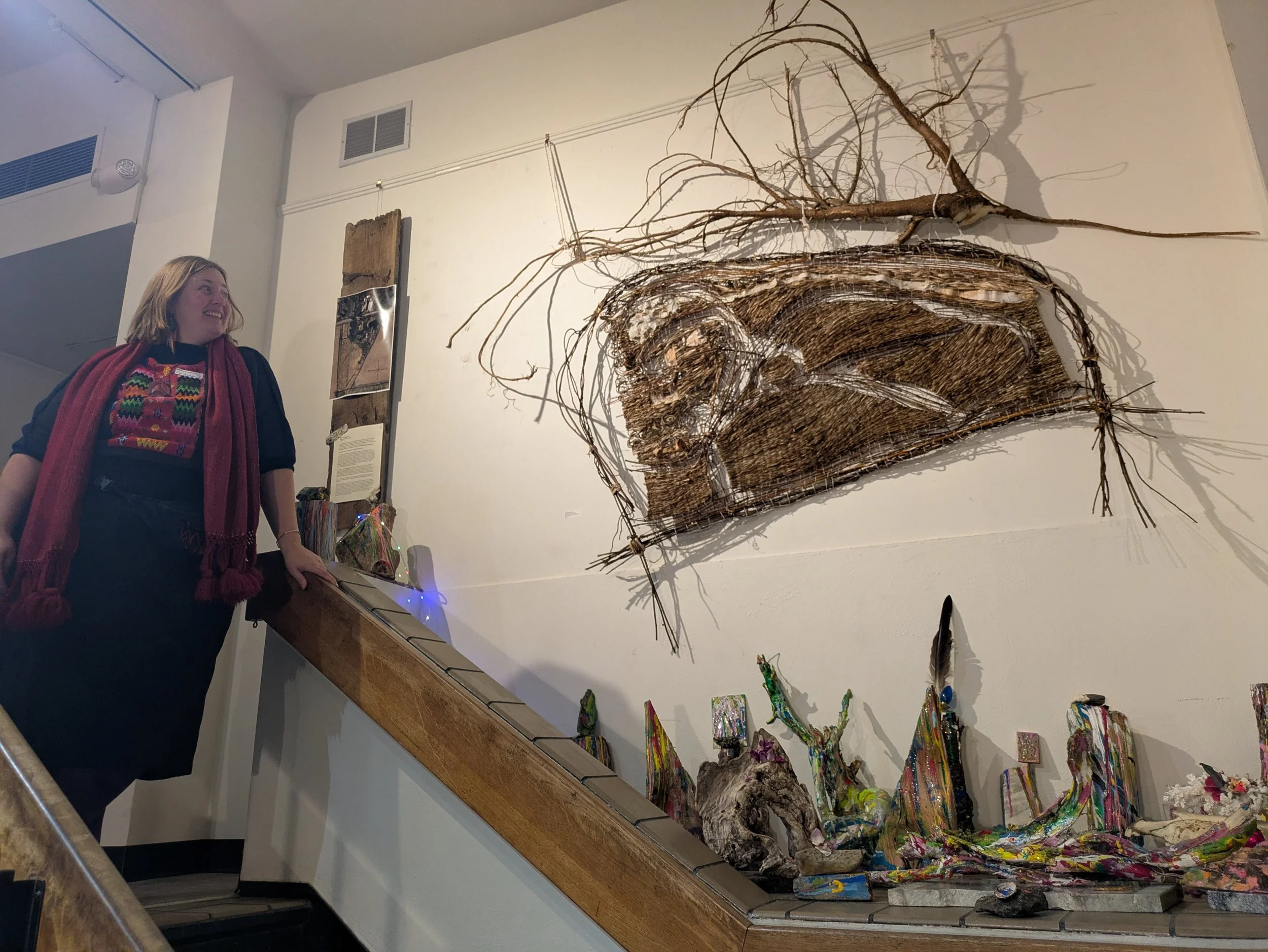
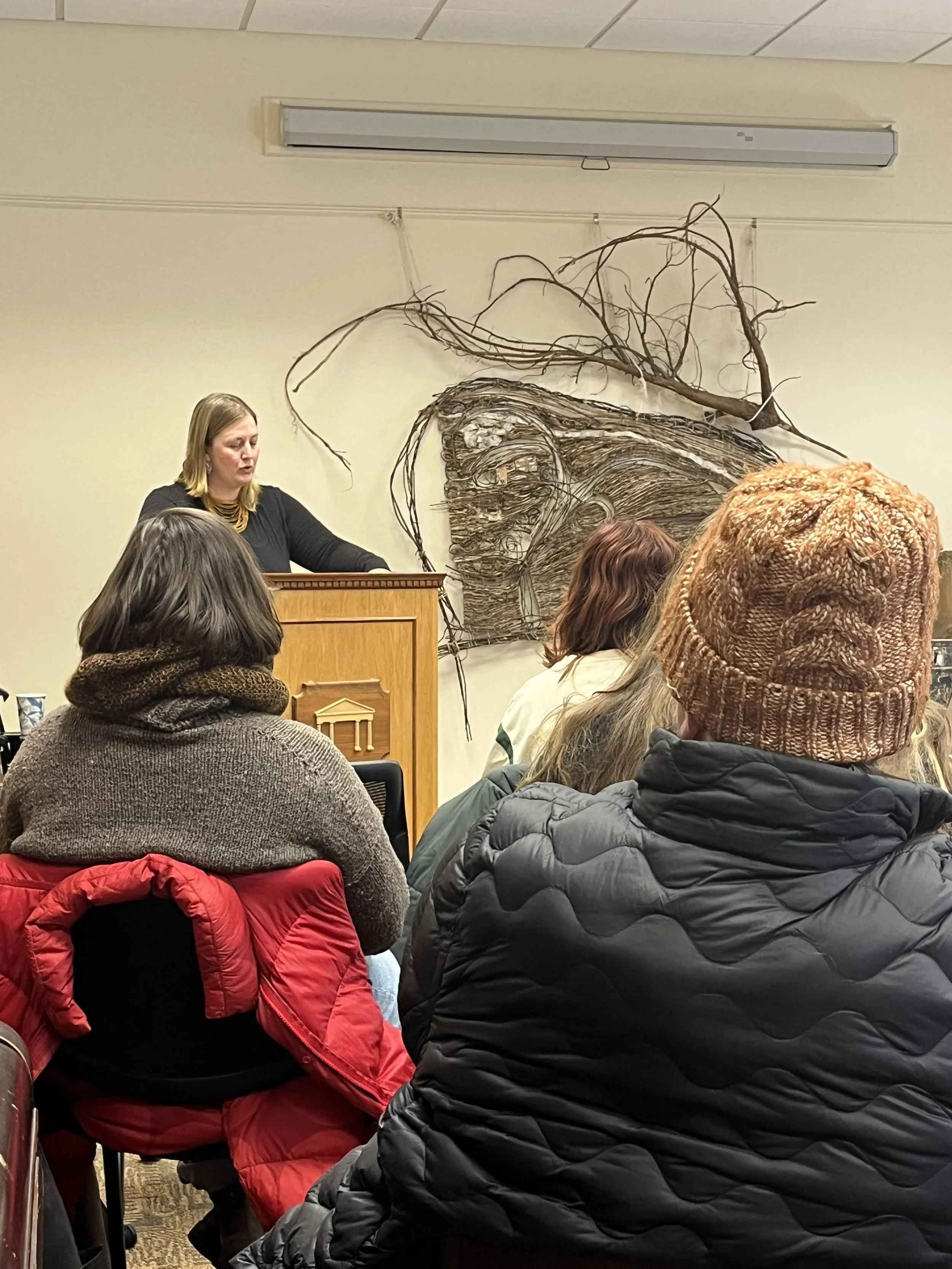
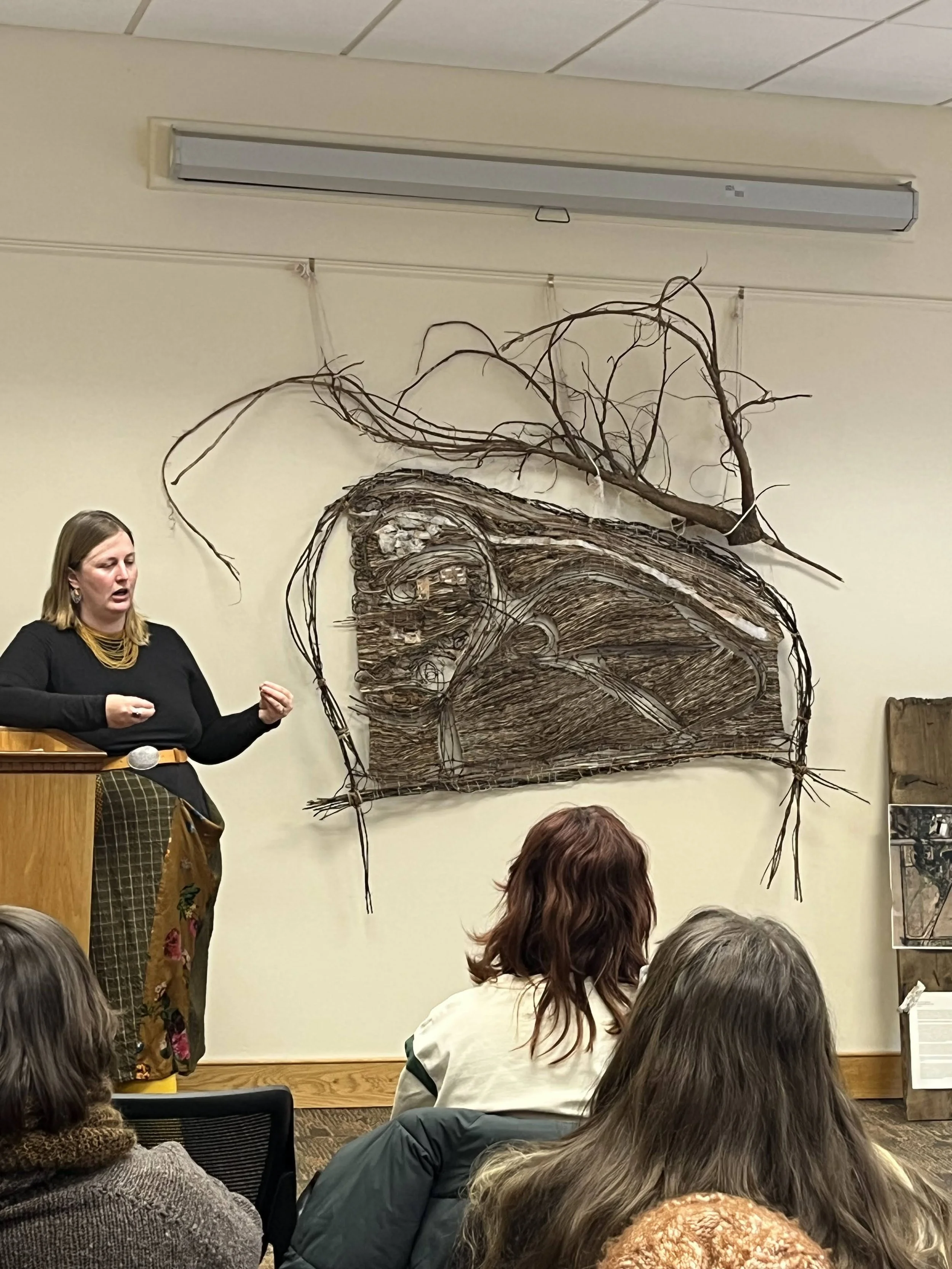
January 31st 2026 - Artist Talk at the Ulysses Philomathic Library, Trumansburg NY
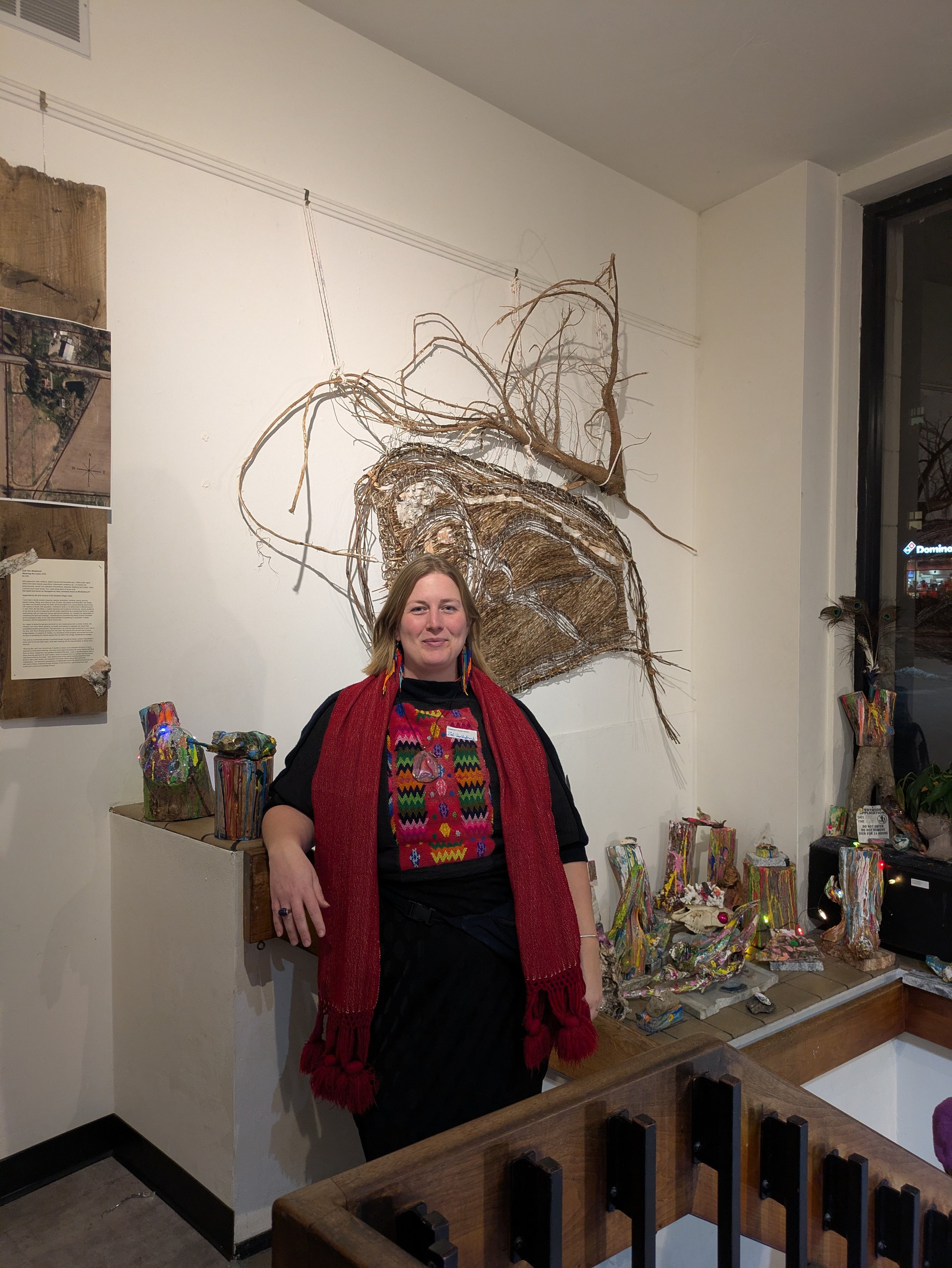
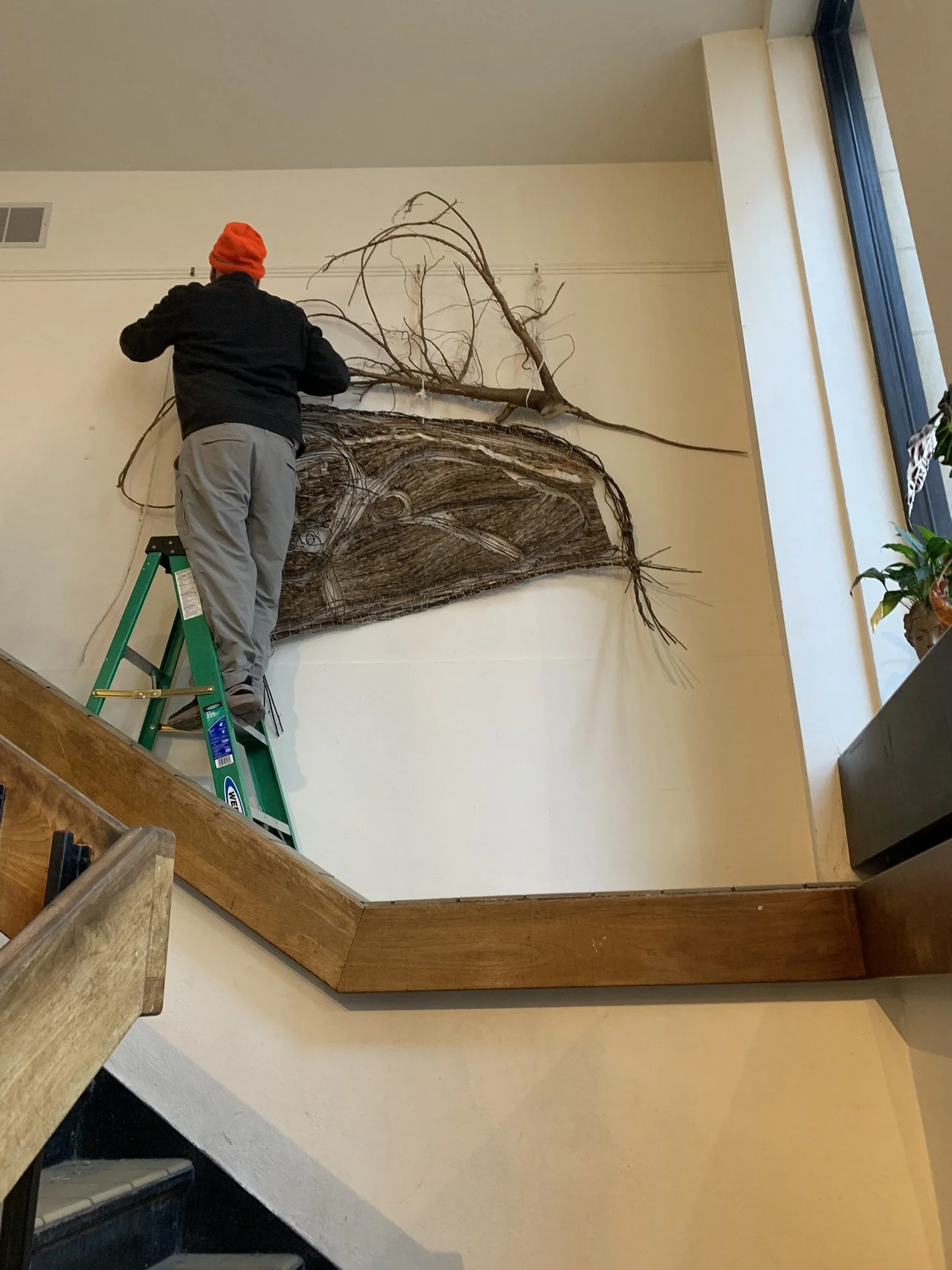
December 2025 & January 2026 - On display at the Community School of Music & Art in Ithaca NY from December 2025-January 2026 as part of the ‘Threads of Tradition’ gallery exhibit.
August - November 2025 - Harvest and weaving of materials at ARQ Barn, Mecklenburg NY
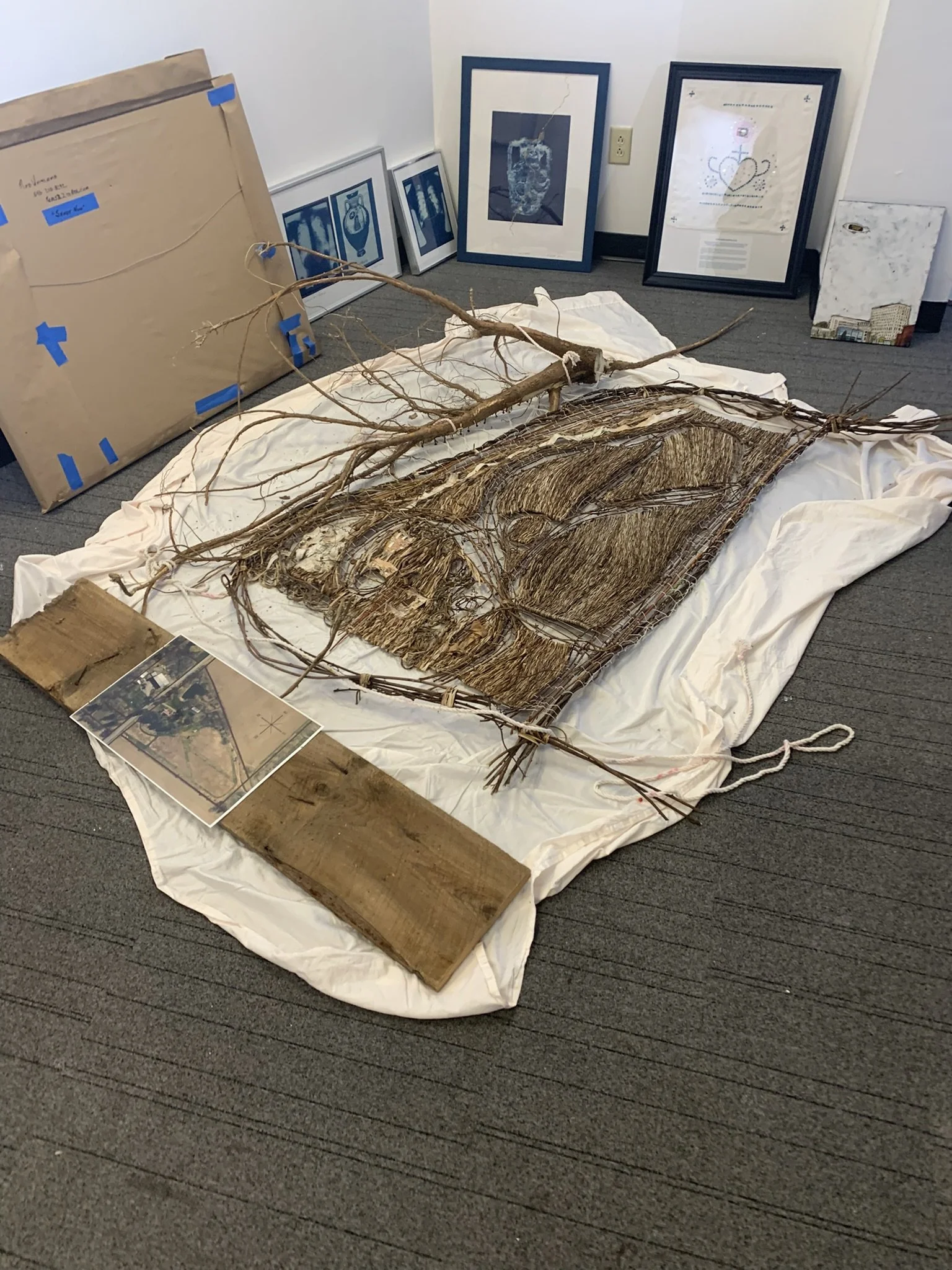
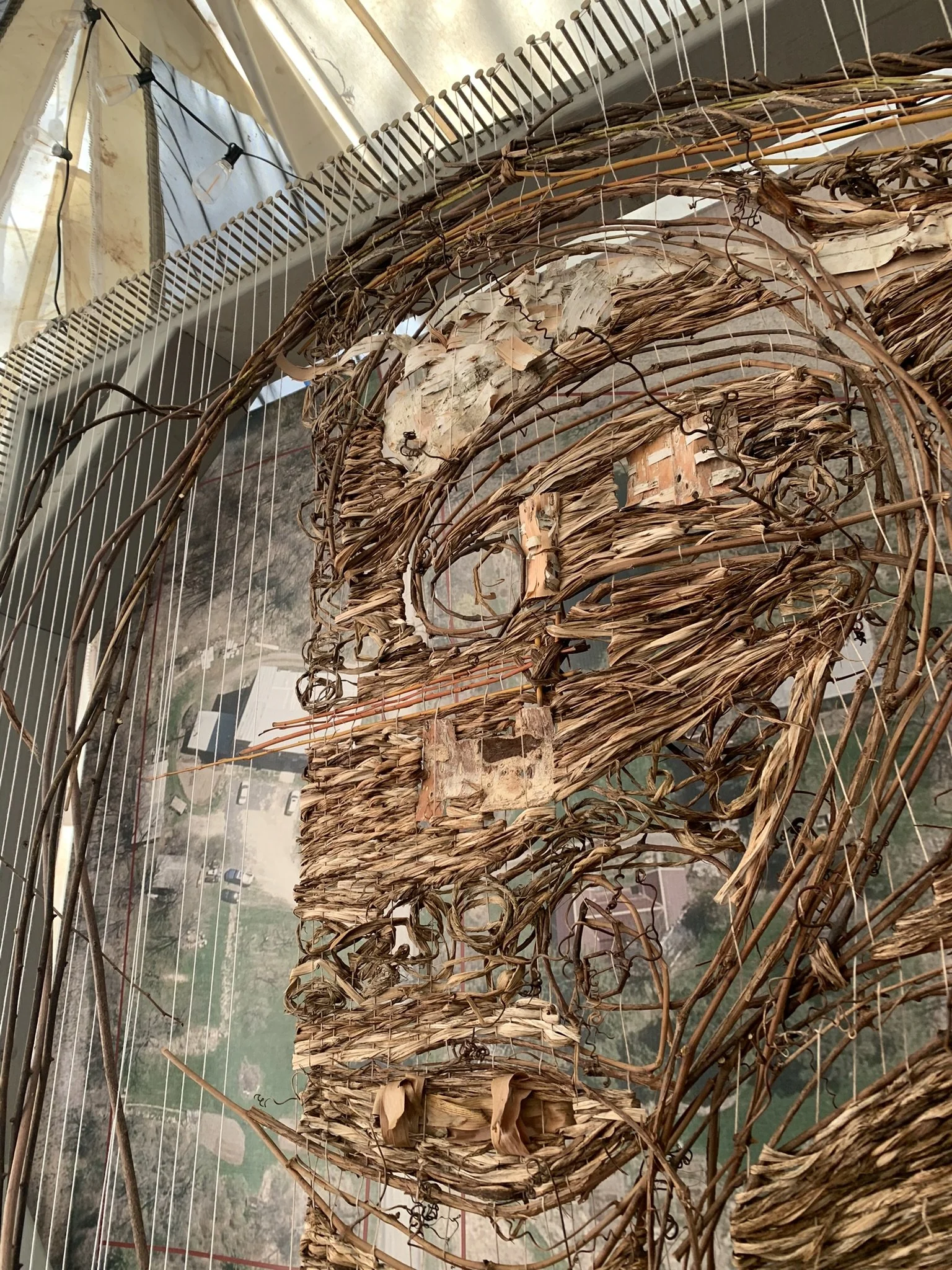
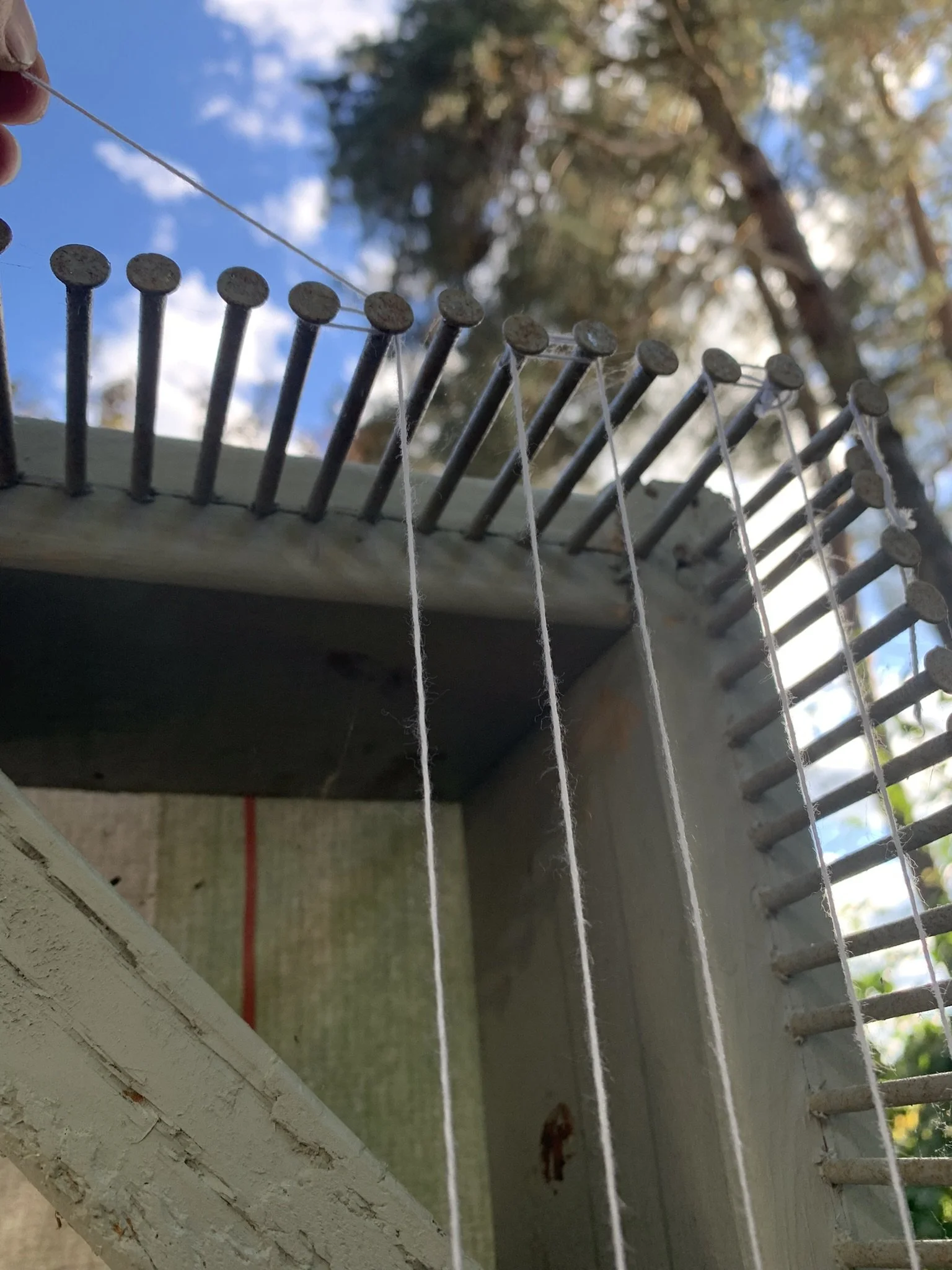
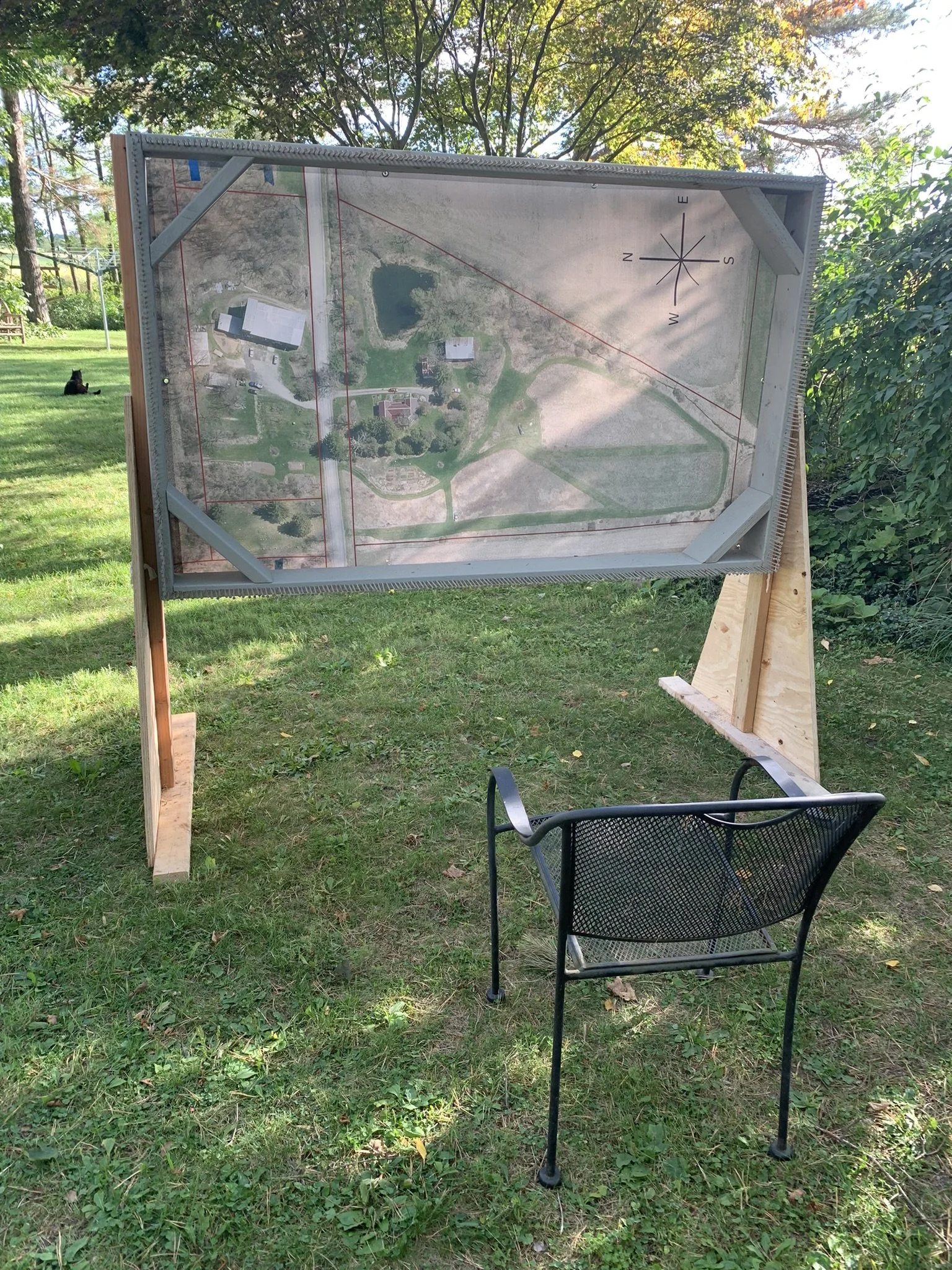
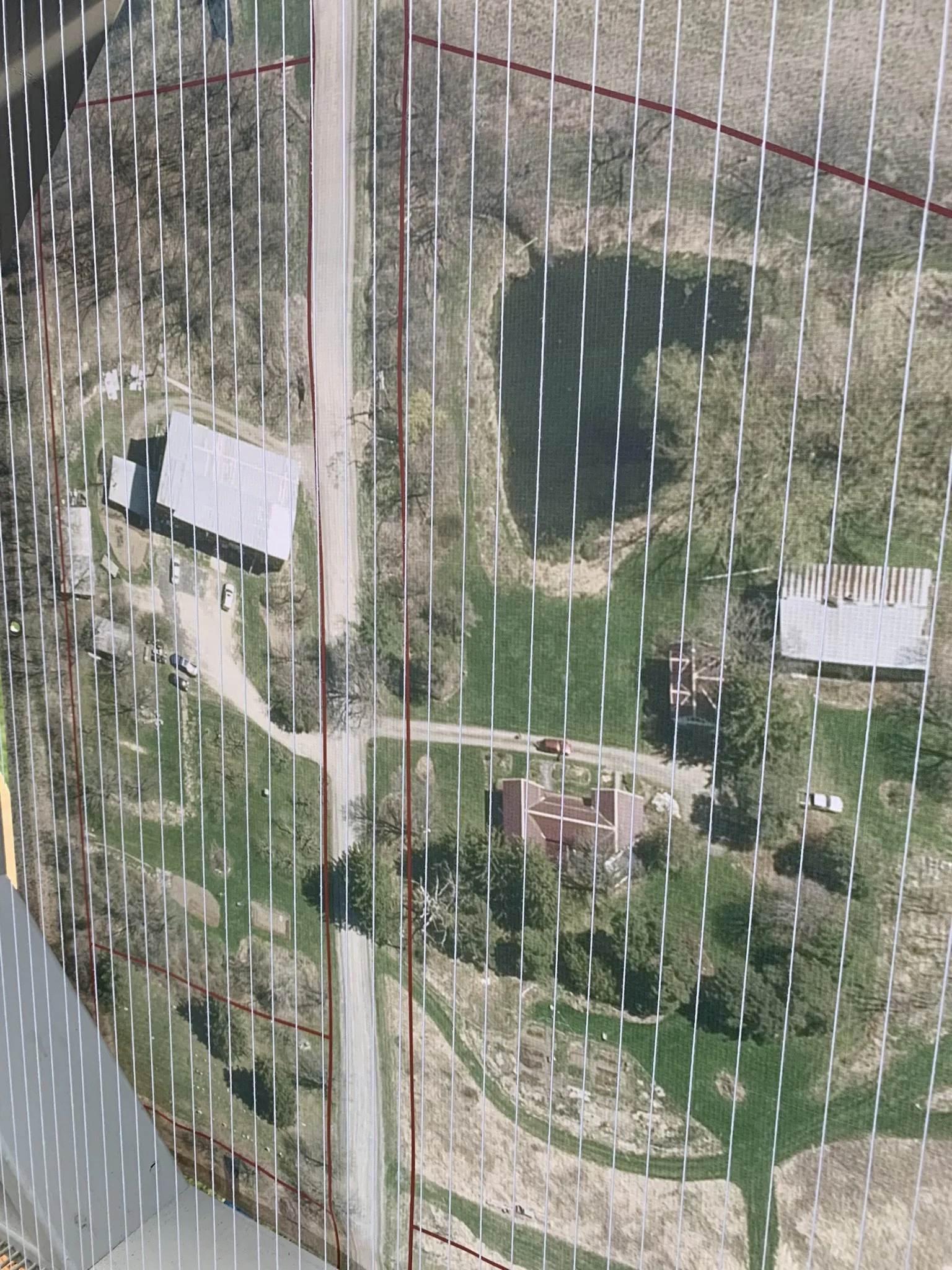
Spring 2025 - Construction of loom stand, and design of vinyl banner map for weaving template with support from Caleb T. Smith
February 2025 - Individual Artist grant received from Arts Council of the Southern Finger Lakes
———
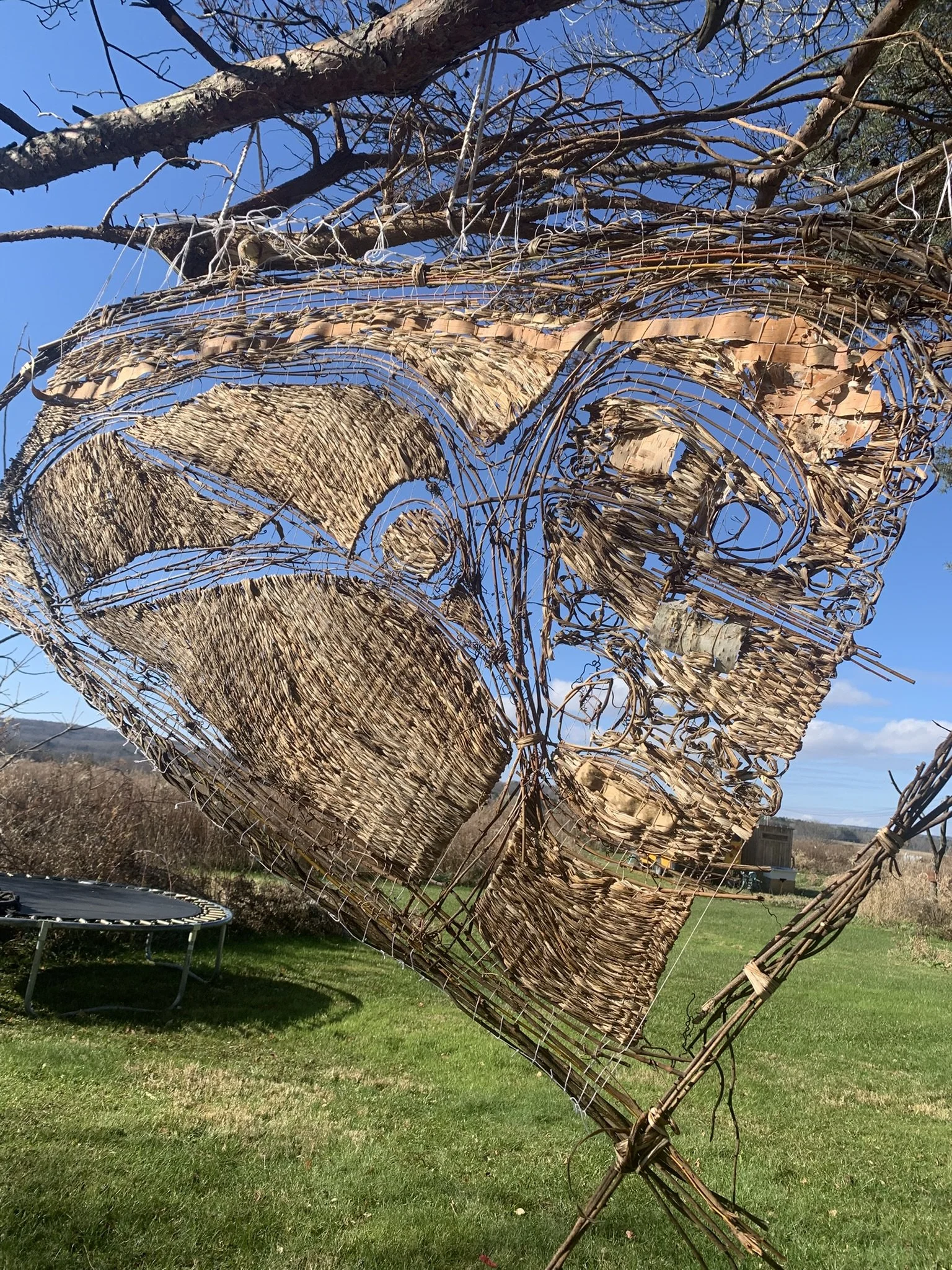
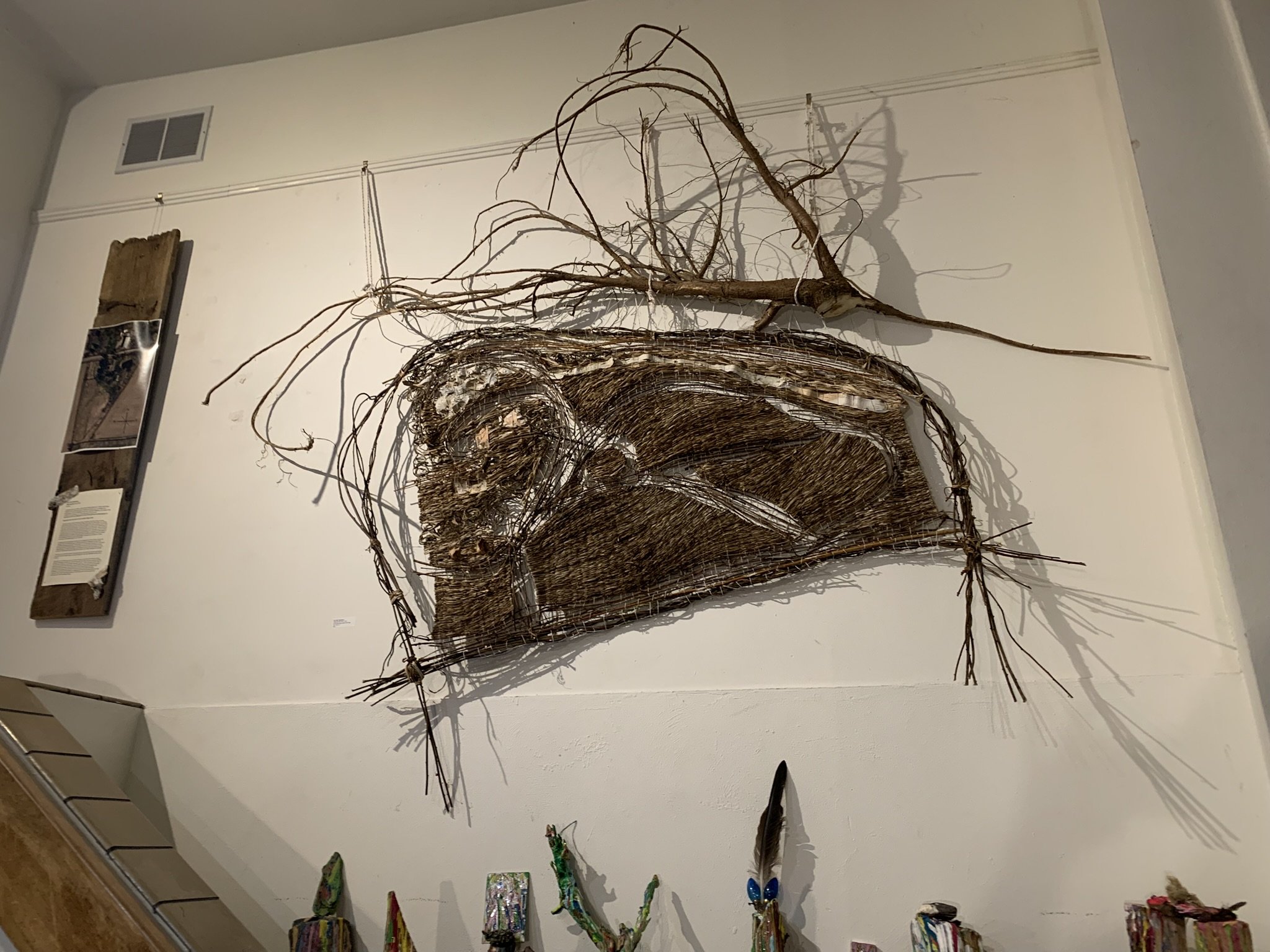
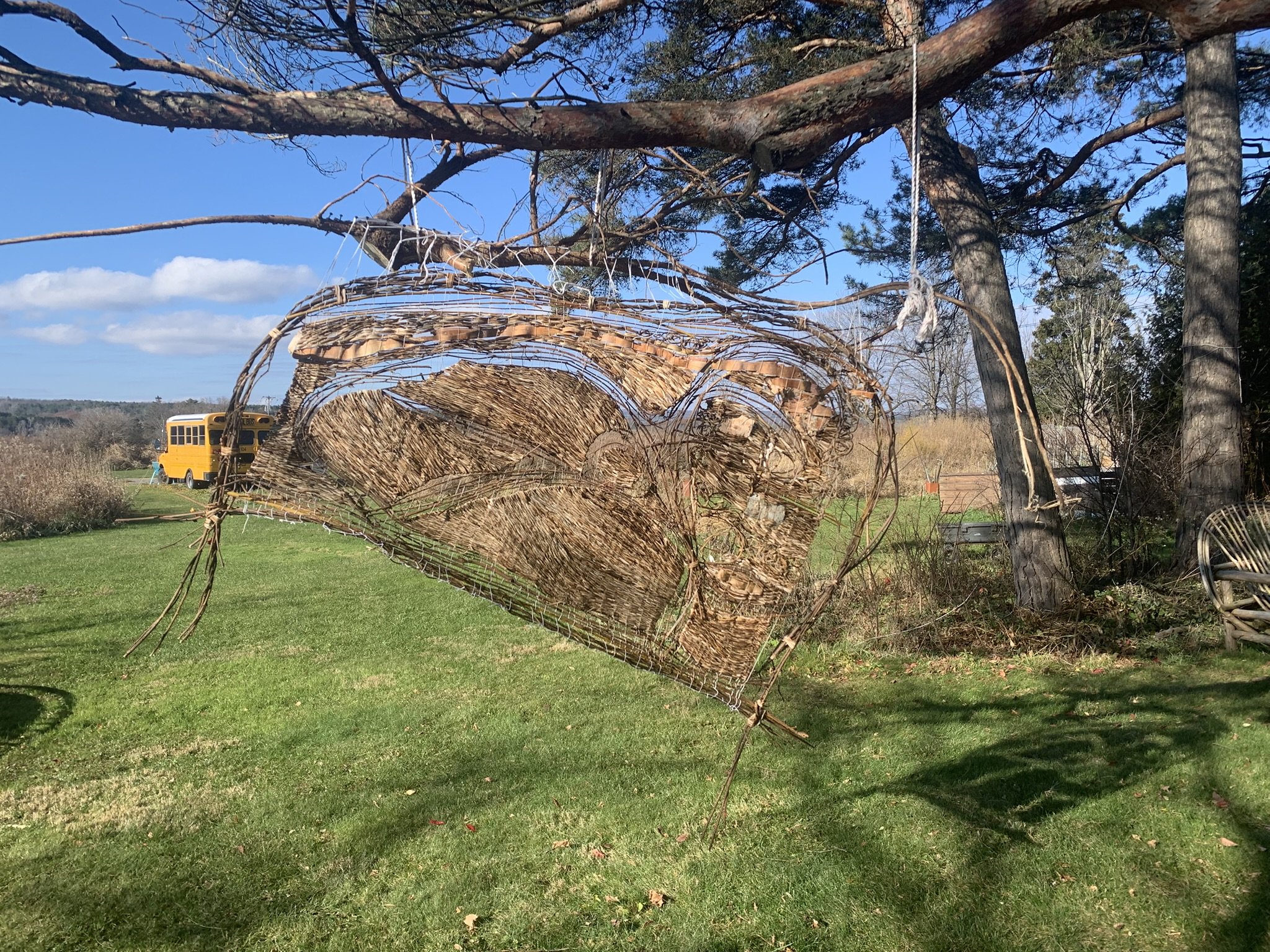
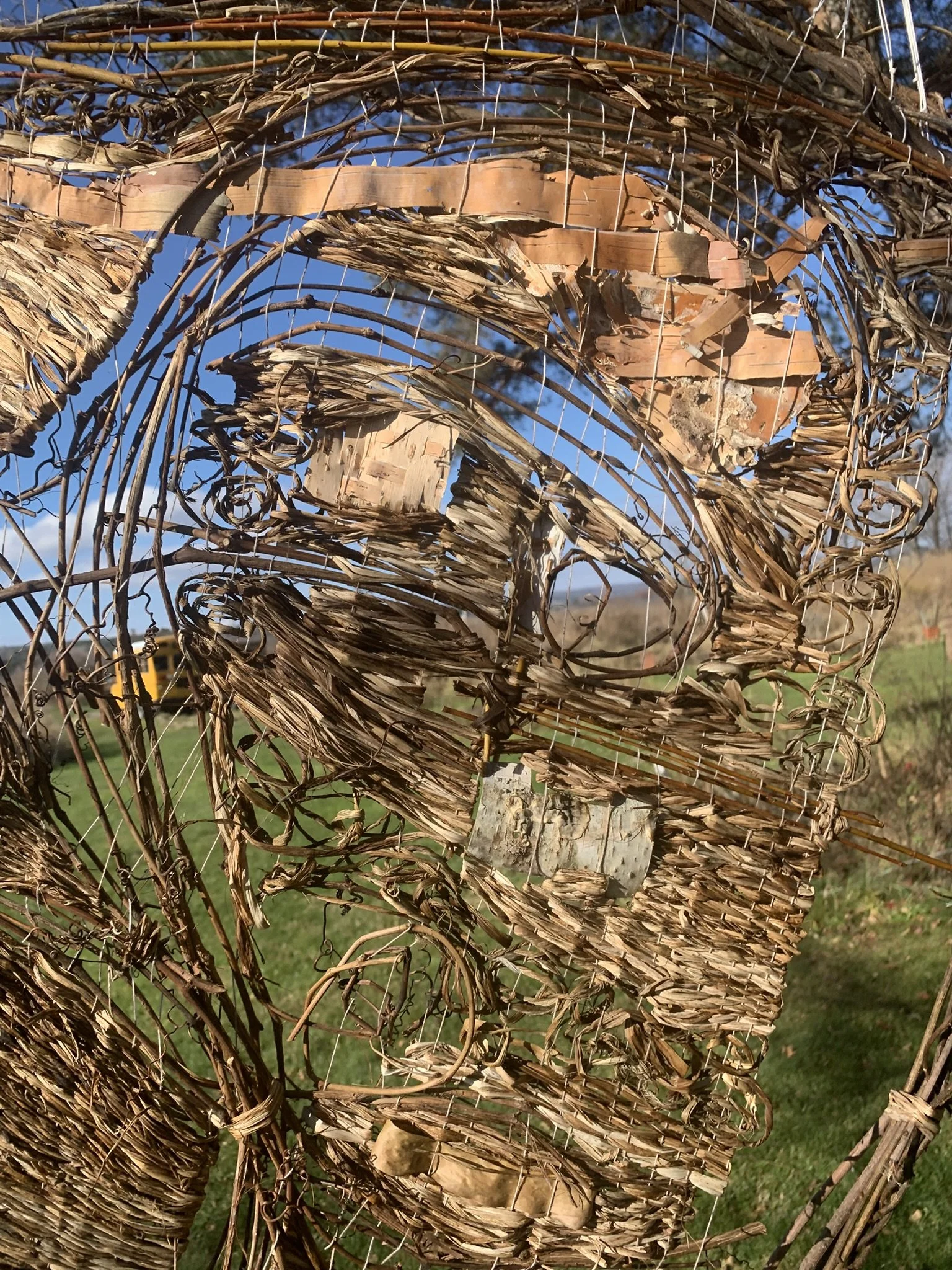
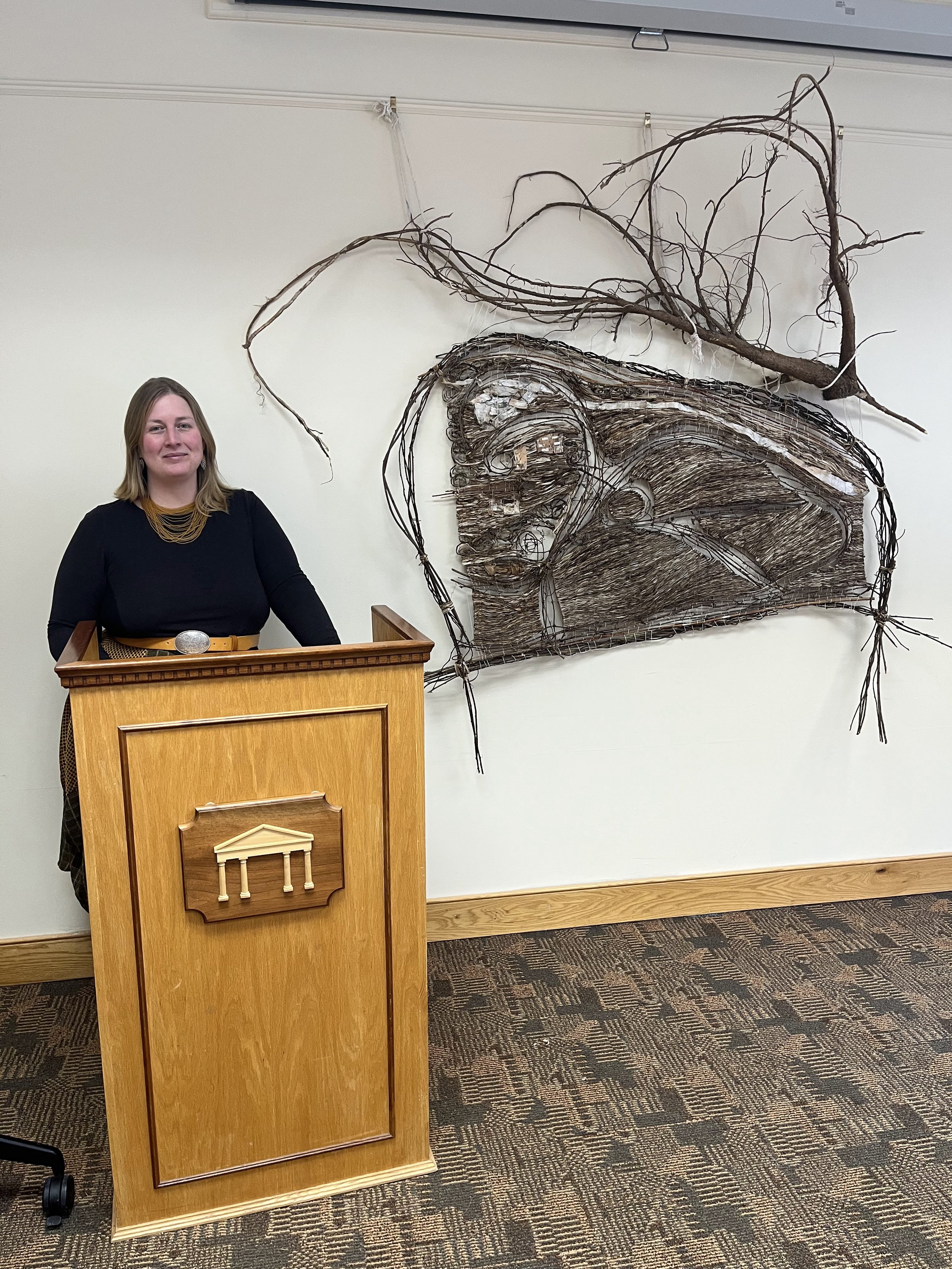
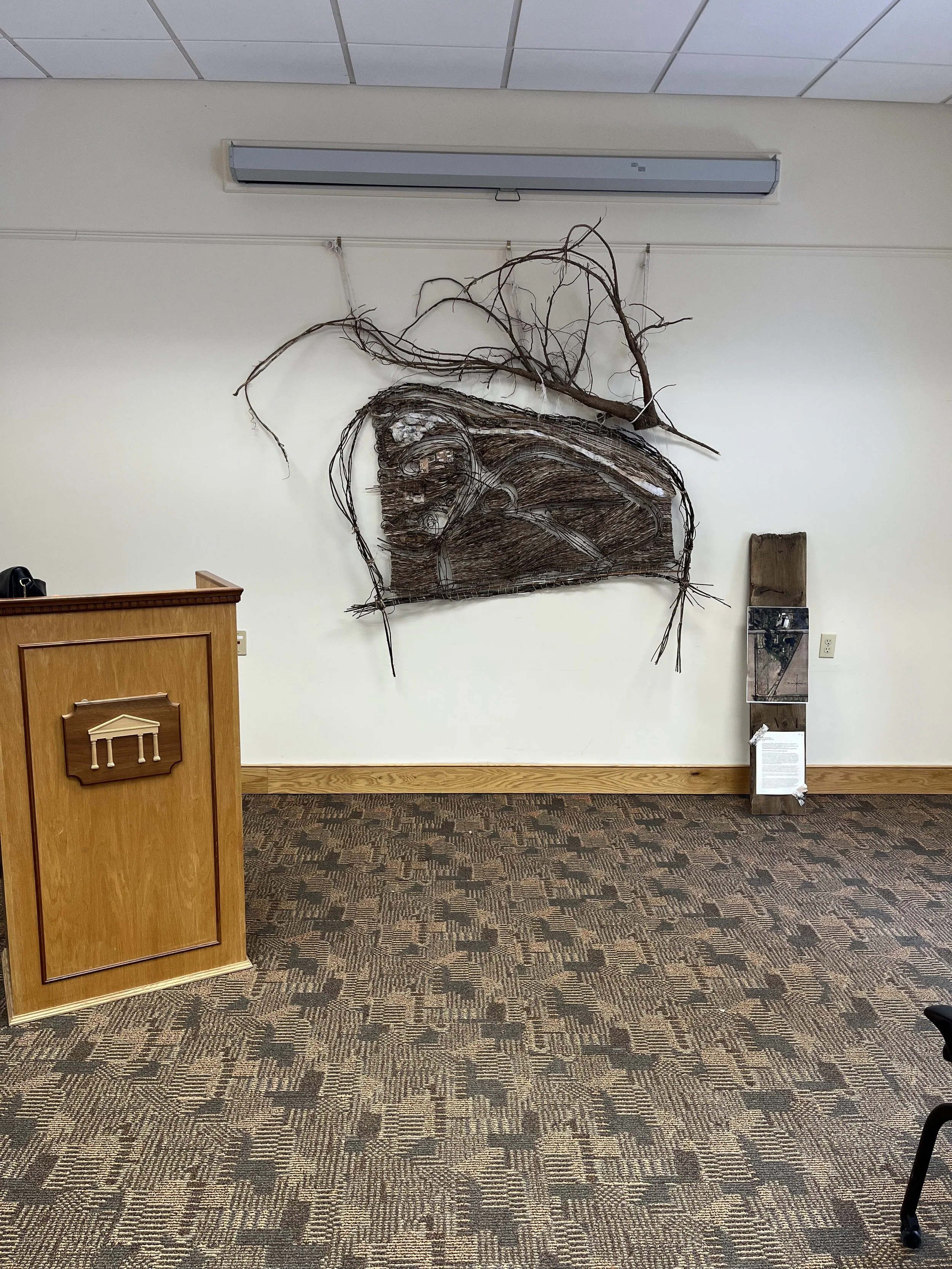
Weaving the Land, 2025
Design, construction, harvesting, & weaving by Zoe Van Nostrand
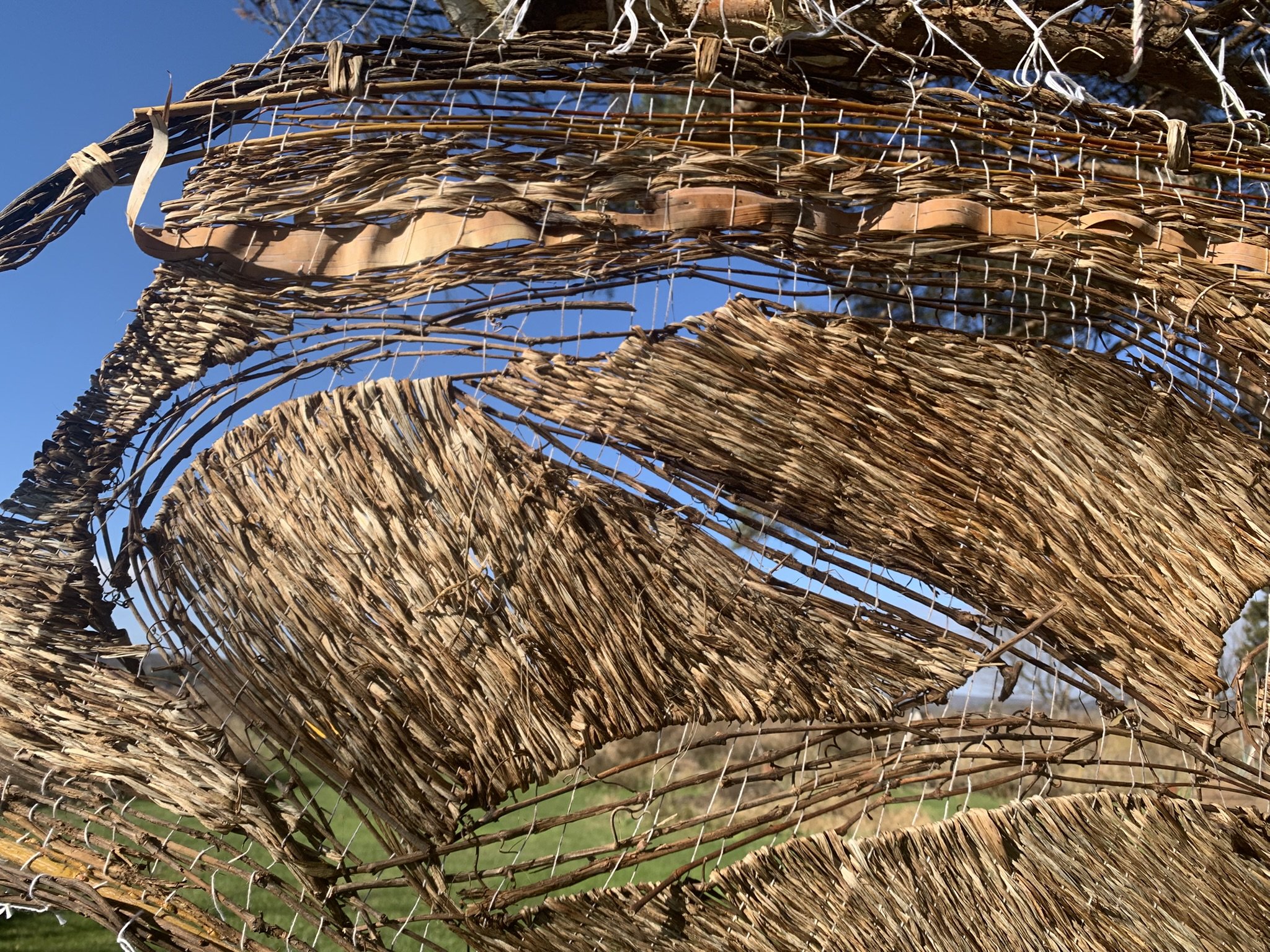
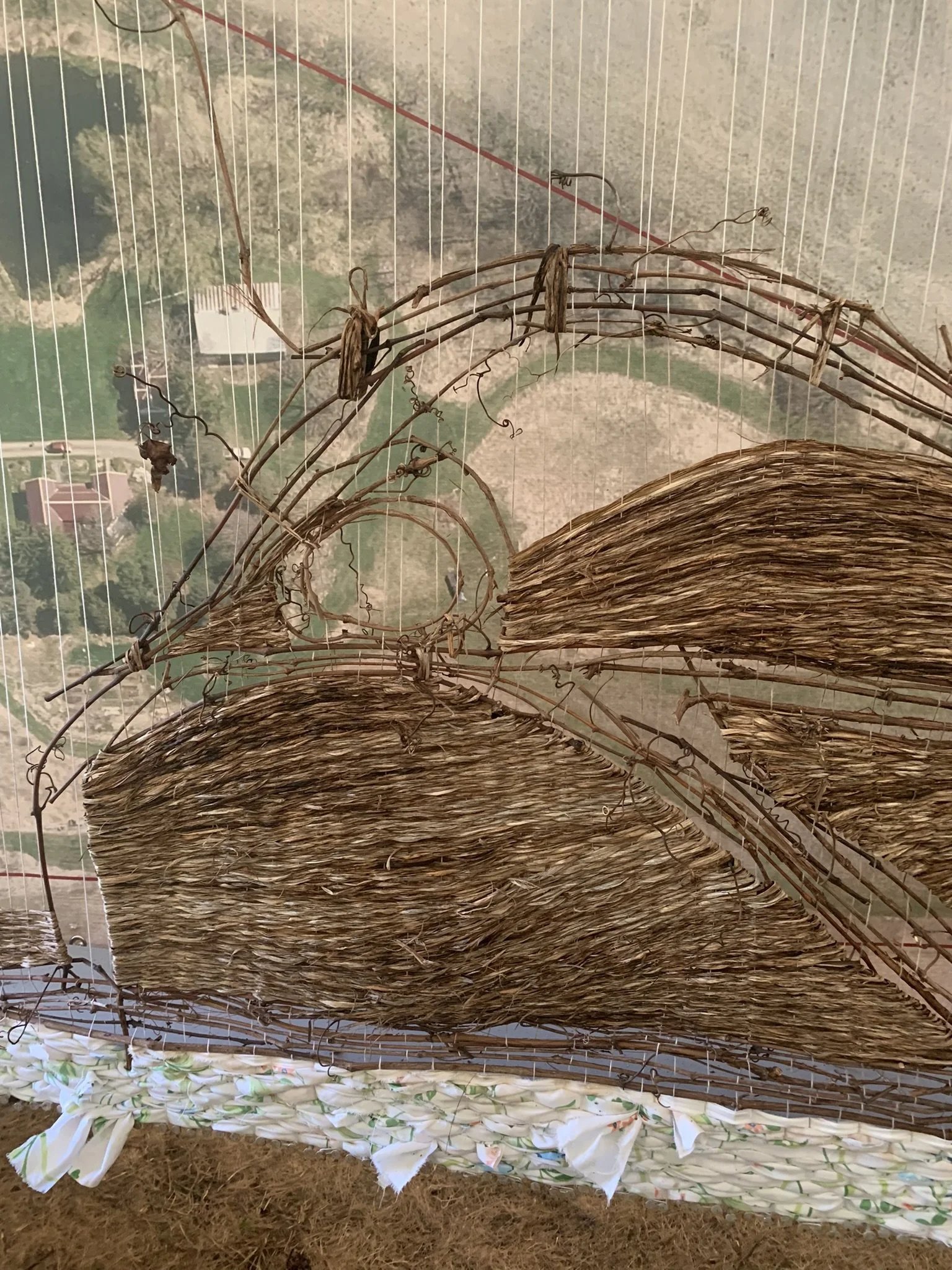
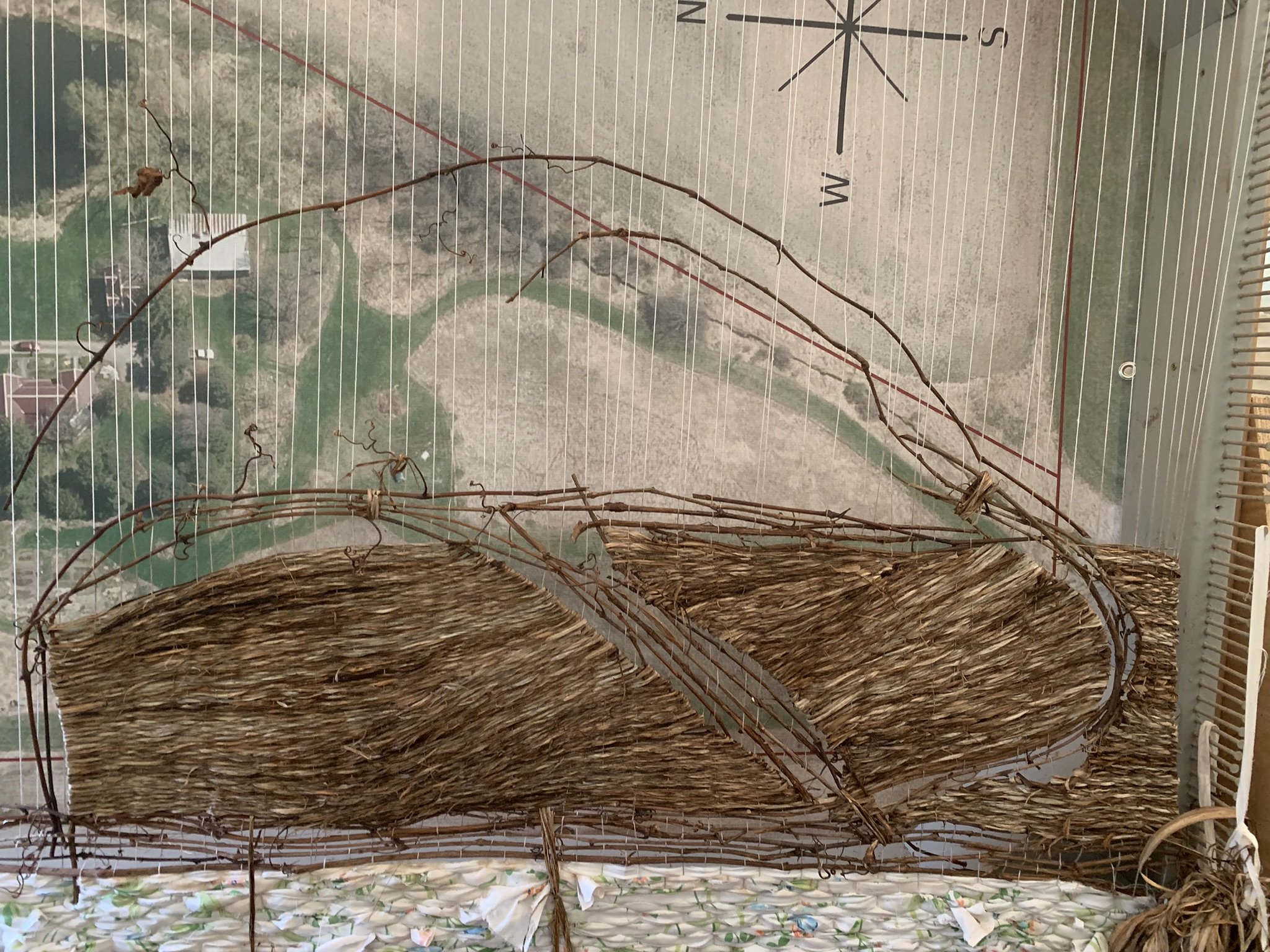
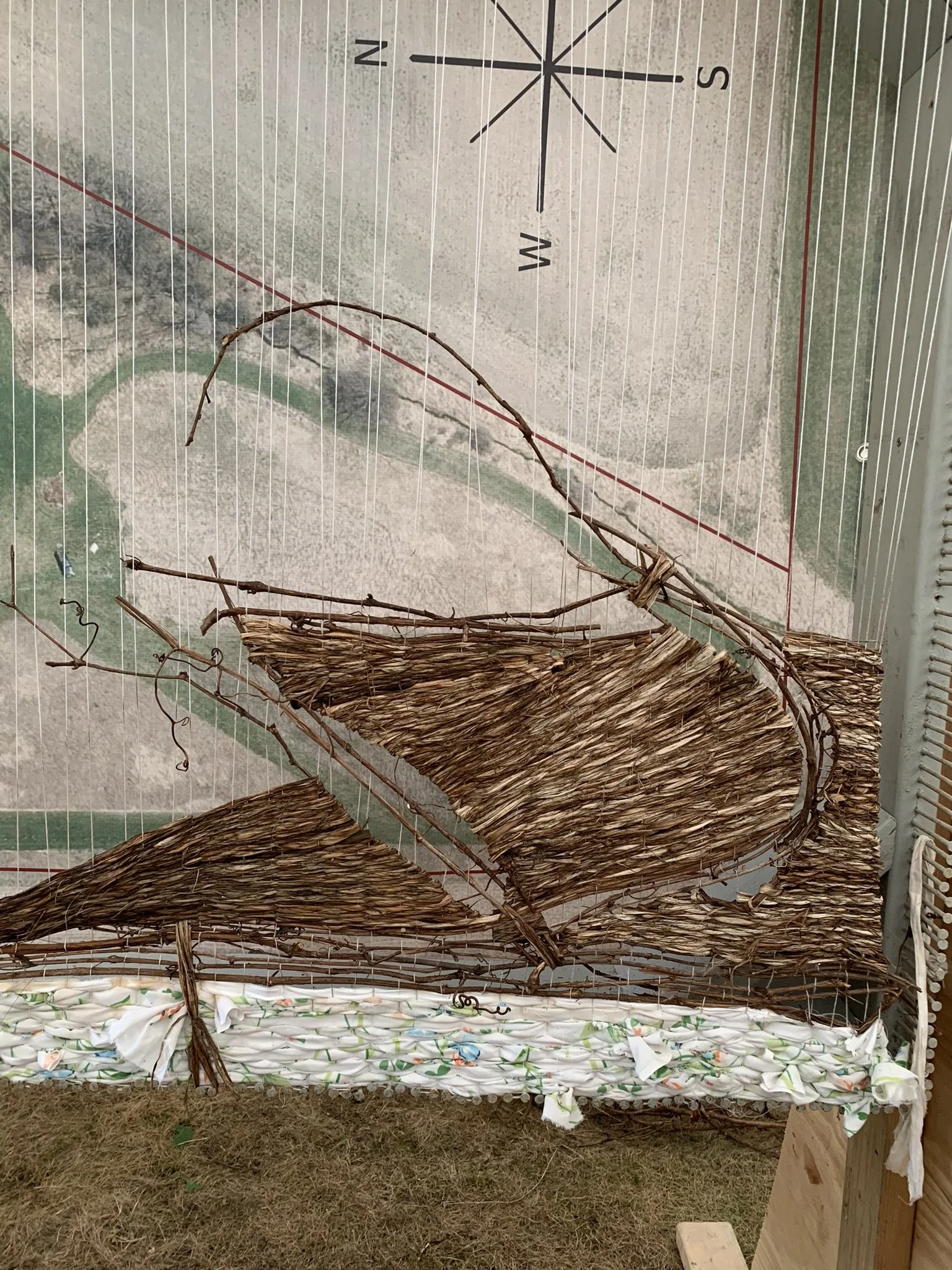
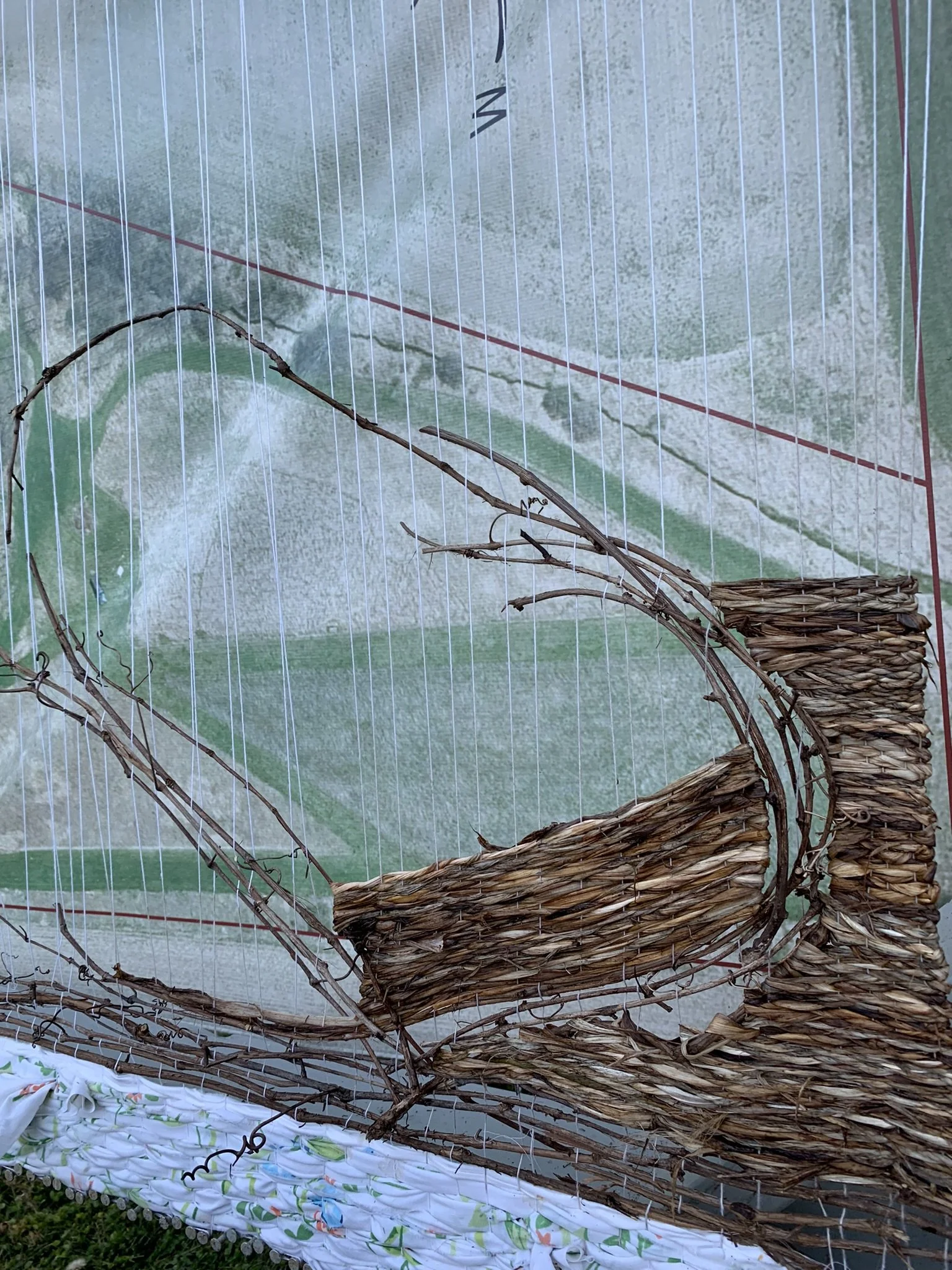
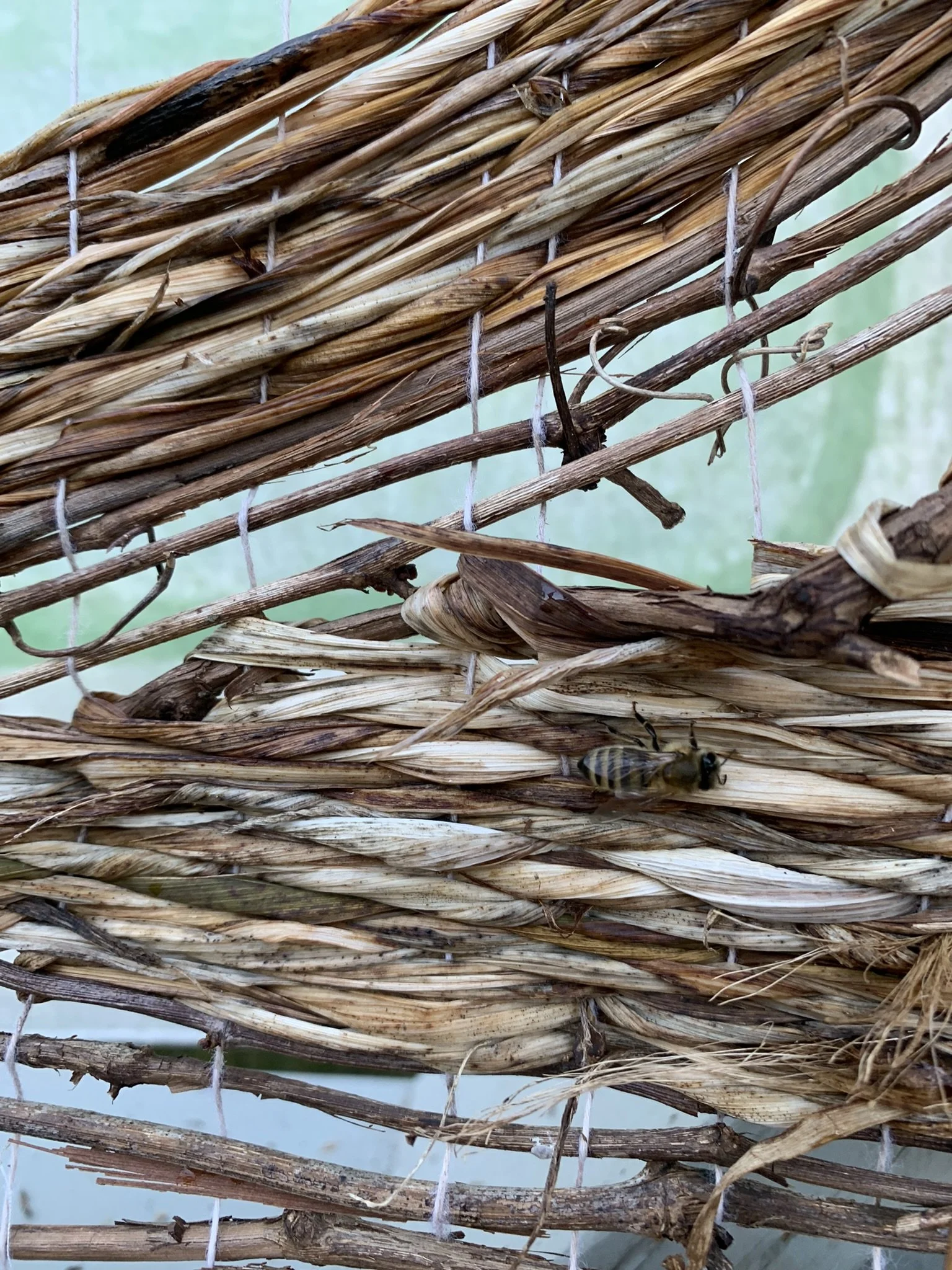
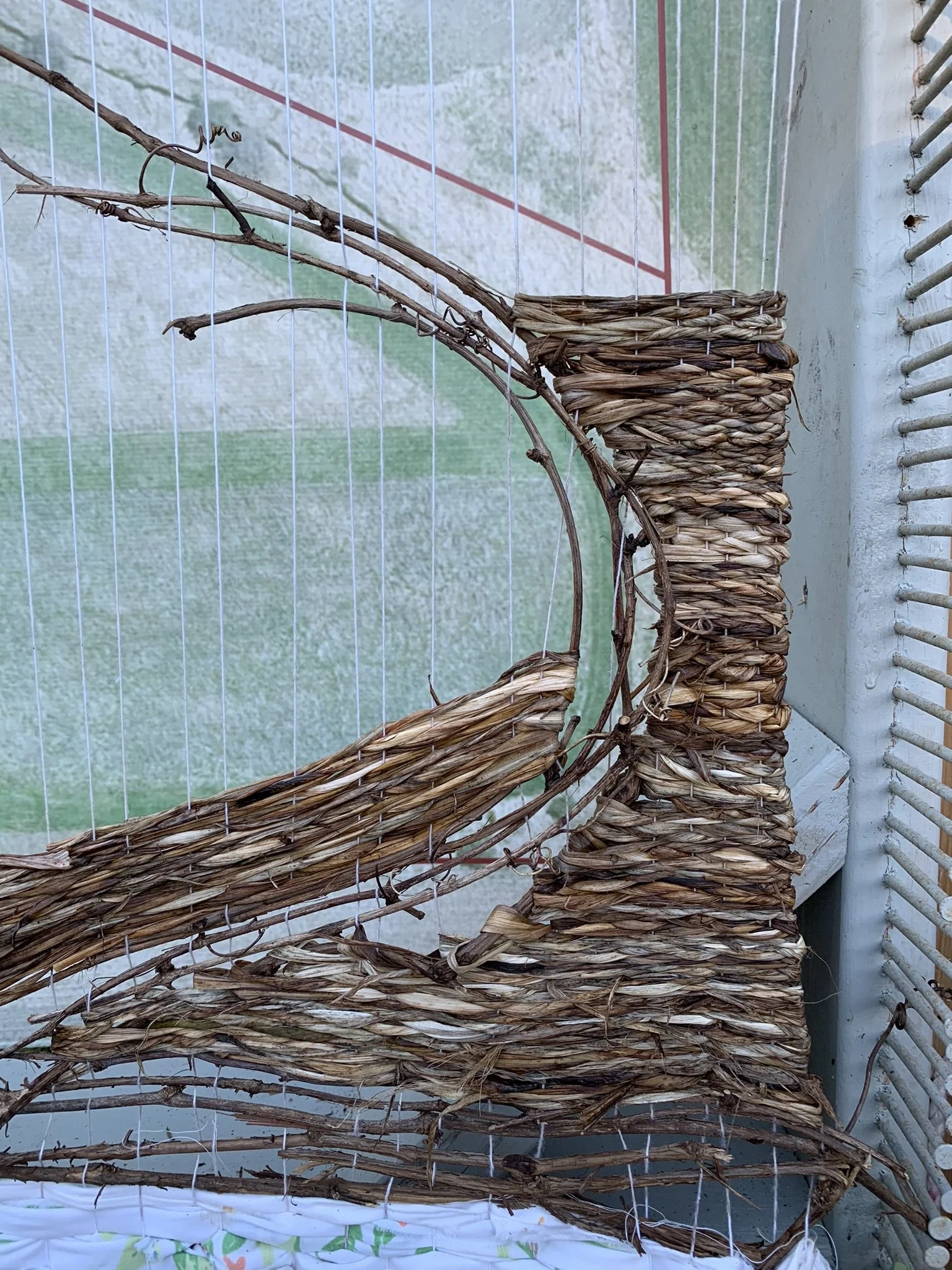
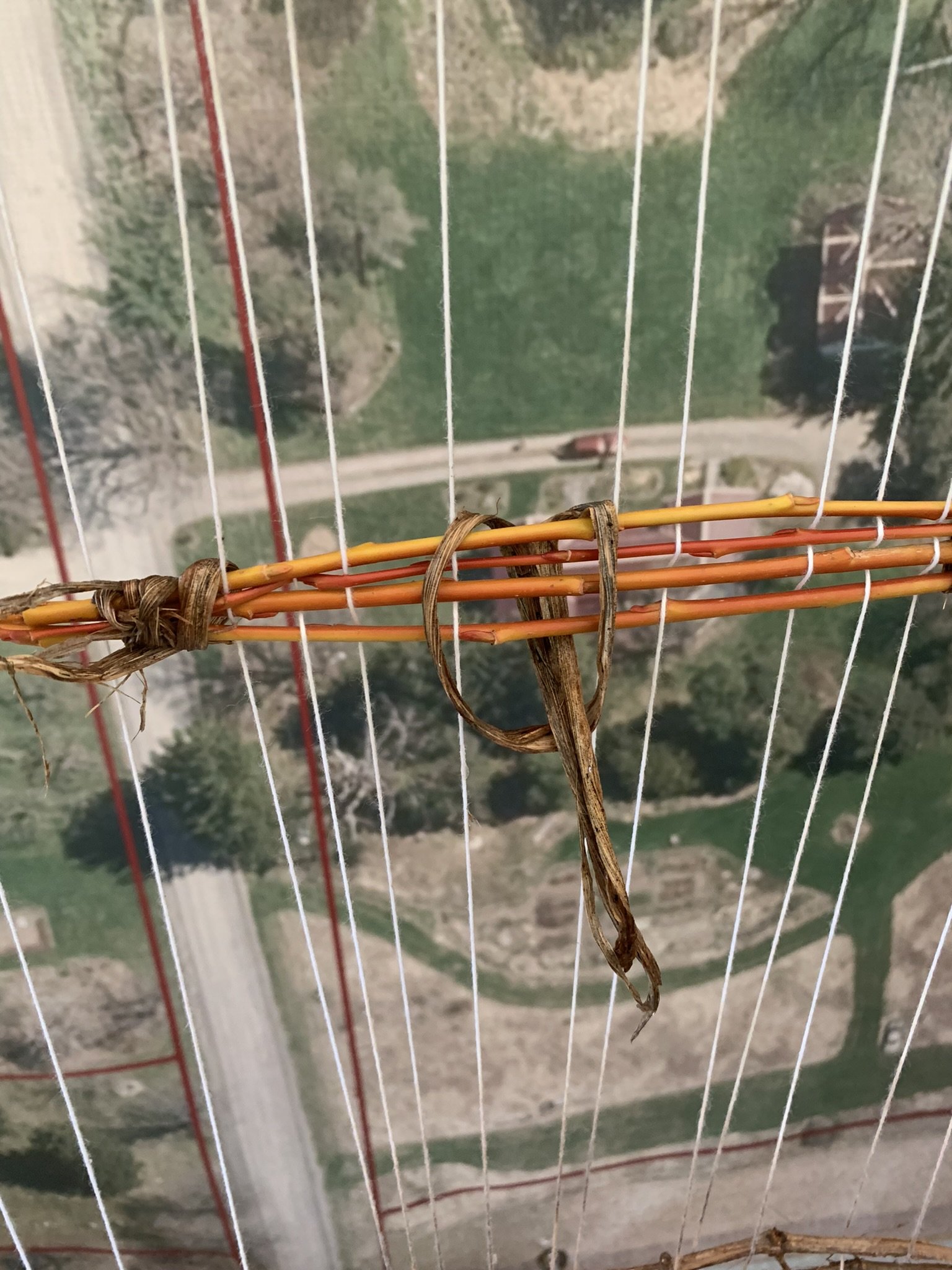
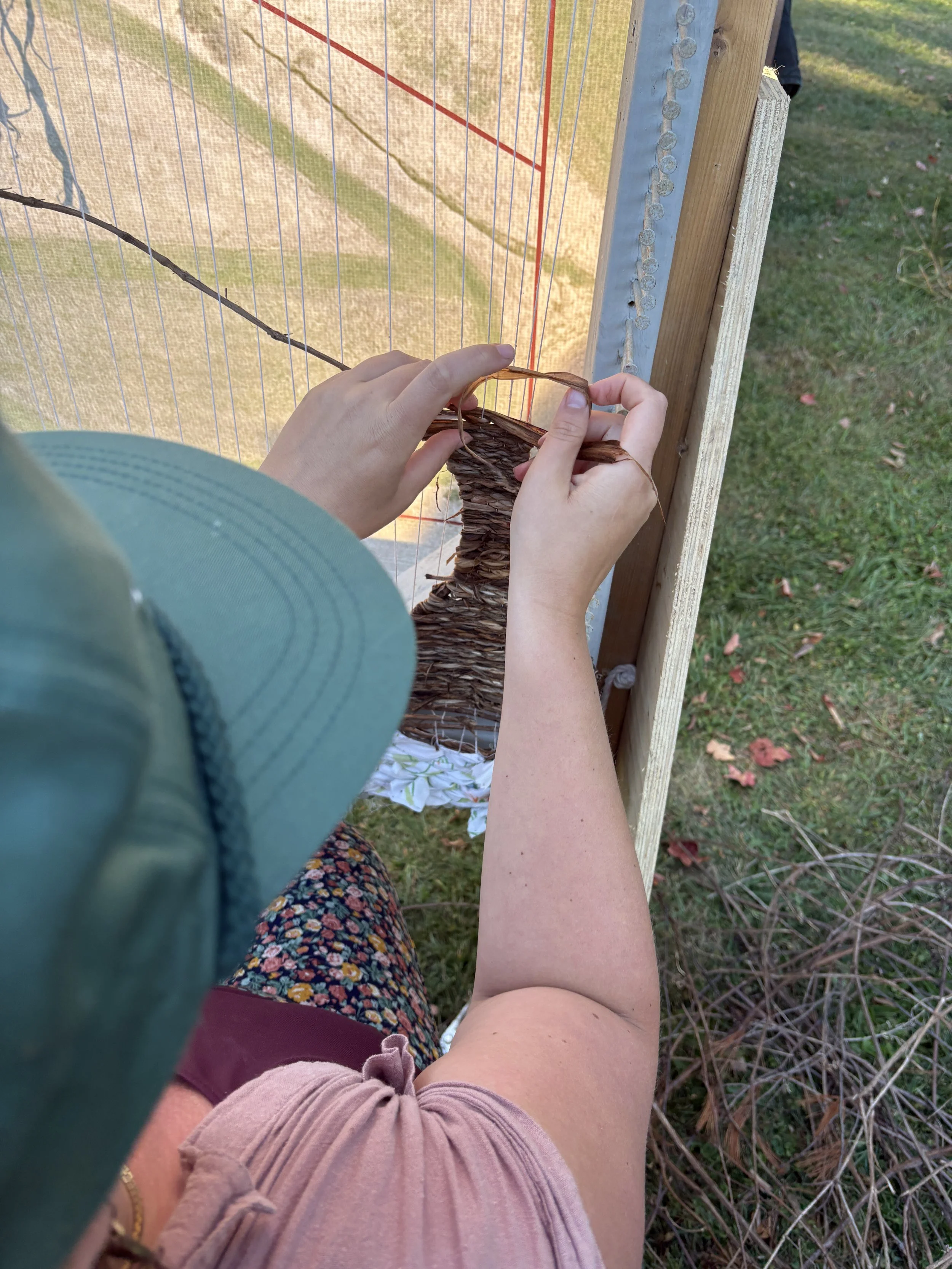
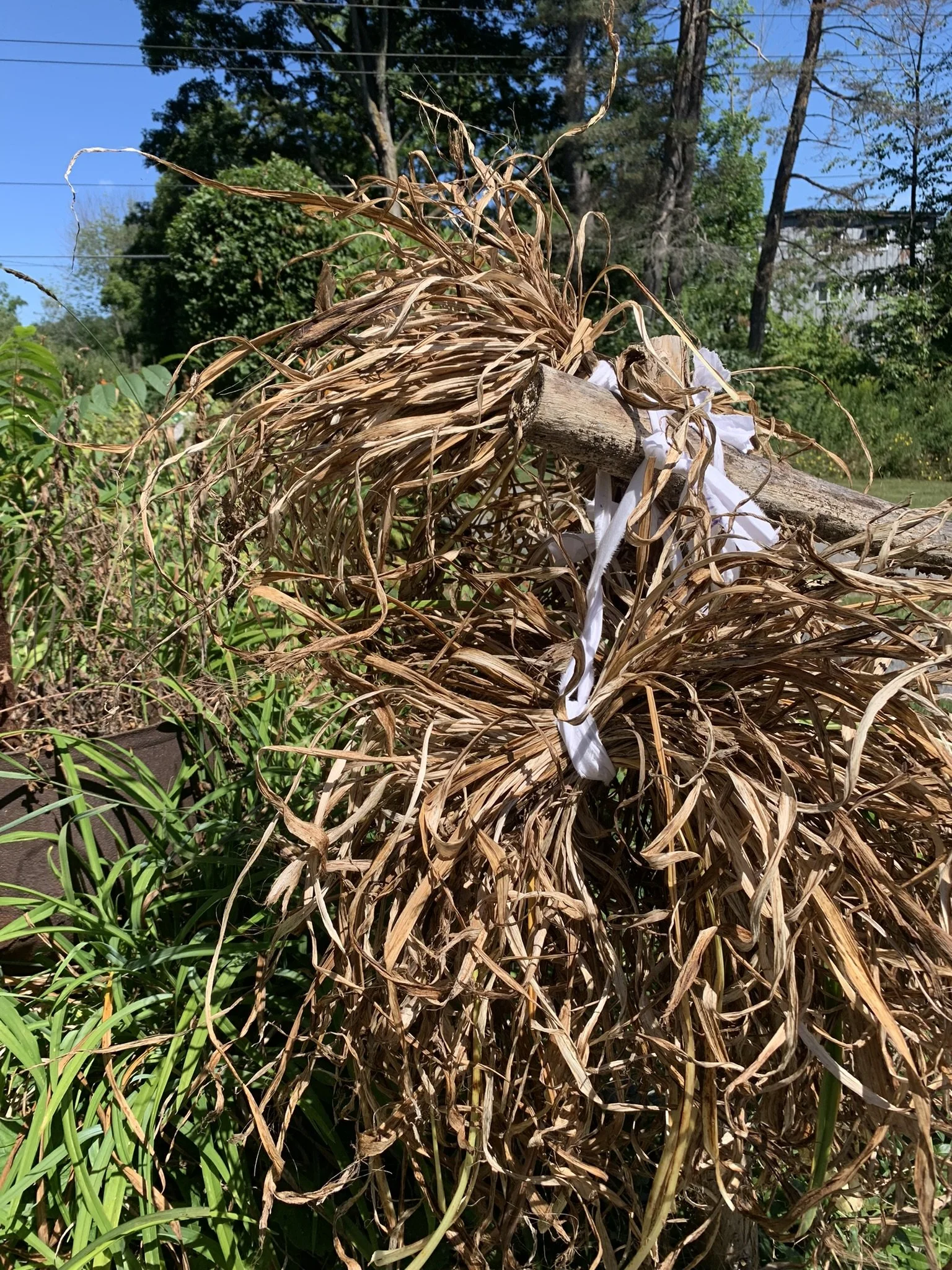
wild grapevine (vitis vinifera), daylily leaves (hemerocallis spp.), willow (salix nigra), white birch bark (betula papyrifera), bittersweet (celastrus sp.), iris leaves (iris atropurpurea), locust root (gleditsia triacanthos); polyester kitestring cord (warp), cotton 3-strand cord (rope loops), iron (nails along back of locust root)
Harvested and woven on Gayogo̱hó:nǫˀ land, commonly known as Mecklenburg NY
Supported by the Arts Council of the Southern Finger Lakes
—
I have been a textile student (weaving, sewing, embroidery, mending, dyeing, spinning, basket-making, felting, and more) for over 20 years. My passion and fascination with textiles has taken me traveling across the world, and encouraged me to pursue learning opportunities with dozens of textile craft educators. I inherited 9 acres of my fathers land in Mecklenburg NY in early 2023. My late father, a master carpenter and sculptural woodworker, viewed caretaking of the land as an act of reciprocity and his artistic experience as a woodworker led him to deep relationships with our trees and various agricultural buildings. As I adopted the responsibility of caretaking the land and buildings, I experienced an overwhelming feeling of being uninitiated and ill-equipped to take on the vast responsibilities of caretaking an ecosystem, multiple structures, and the expectations of my community.
As I began to tackle the gardens and build my own relationships with our trees, bushes, wild meadow, and many flower gardens, my textile mind started to catalogue the natural fiber possibilities already growing here. This sprouted in my mind the idea of weaving my own map of the land, with fibers already growing from the earth. My hope for this art work was to build a bridge between my passion for textiles, my inheritance of this property, and connect me to the process of caretaking the natural spaces that my father had lovingly maintained for decades.
This work is a connected process of working through my grief at losing a parent I had shared a home with for the last eight years, while also maturing into the responsibilities he left for me to discover.
‘Weaving the Land’ took me just over 2 months to weave, at an estimated 45 hours of active weaving of wet/soaked materials, and more hours spent harvesting the seven natural weft fibers from our trees, hedgerows, and gardens throughout the year. I used a Zapotec-inspired style of block weaving approach for each section, using my lessons from my Zapotec weaving teacher JoséBuenaventura Gonzalez; I also utilized some of my natural basketry experience from lessons with Justin Sutera; and inspiration from many online natural fiber and textile craftspeople. I am thankful to generations of craftspeople across the world that learned to work with each of these materials through centuries of trial and error, and for those that have continued to pass the knowledge forward.
——
The creation of textiles is one of the largest environmental waste polluters globally, and all of us have worn woven items, and will throw them away during our lifetimes. My hope with creating a piece made entirely from biodegradable materials is that it will open minds on how the natural world around us can inspire artistic practices, and encourage us to look at our landscape in a different way. Seeing both the plants that we can harvest and use in reciprocity without a negative environmental impact, and also offer a pathway for more mindful engagement with our natural world and the ways it can heal us as well.